Expert Insight

8 minute read

Researchers react: Quick takes on the Clinical Innovation Summit

The 2023 Clinical Innovation Summit came and went. Get the scoop on the best and worst moments of the summit — straight from the mouths of our very own researchers.

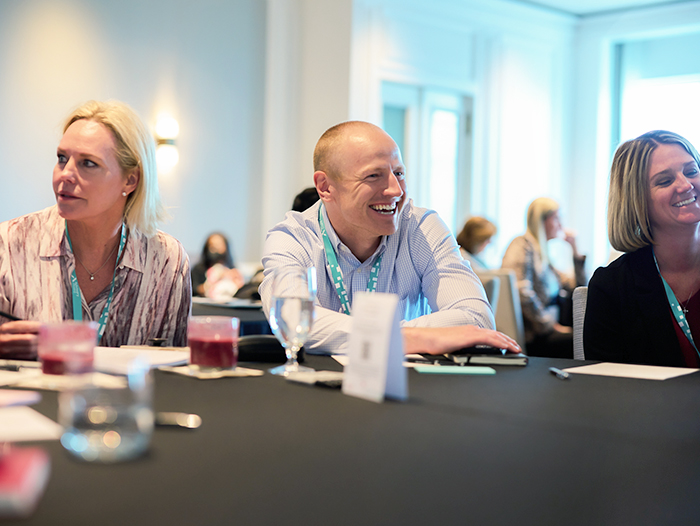
Over 170 leaders from across the healthcare industry gathered in Minneapolis, MN this August for Advisory Board’s Clinical Innovation Summit. Attendees learned about new products and technologies transforming every aspect of the patient journey, but also had their moments discussing the best Minnesota State Fair food vendors. Weren’t able to attend? We’ve got you. Three of our speakers, Sarah Hostetter, Solomon Banjo, and John League, recapped their favorite (and least favorite) parts of the summit — and the Twin Cities — just for you.

1.       What’s your reaction to the keynote speech?

Sarah: I’m not going to lie, I came in skeptical that we were really entering an era of bespoke care — or that “bespoke care” was the right name for this era. But Solomon Banjo convinced me that we’re indeed beyond personalized medicine. As someone who works closely with physicians, I left convinced that physicians are the designers of this new type of care.

Solomon: I am obviously more than a little biased here, but my goal with the keynote was to spark a conversation that would hopefully last throughout the summit and beyond. I feel accurate saying we did the first part, but now I’m excited to engage even more people with the concepts underpinning “bespoke care” and why we feel a new word is not just interesting, but helpful.

John: I’ve been to a lot of conferences recently. I’ve heard a lot of keynotes. Most of them are actively boring. Solomon’s keynote was the opposite of that. Like Sarah, I was eventually persuaded by Solomon’s explanation of the term “bespoke care,” but what stood out to me was how he explained the leadership challenge of closing the gap between where we could be and where we are. “It’s not enough to know what needs to be done,” he said, “we have to be able to mobilize others, including partners, to action.”

“I’m excited to engage even more people with the concepts underpinning “bespoke care” and why we feel a new word is not just interesting, but helpful.”

Solomon Banjo

2.       If you could get an hour with anyone who attended the event, who would it be and what would you want to talk about?

Sarah: Definitely Maia Laing, SVP of health equity at United Health Group. Maia participated in a live Radio Advisory podcast recording where she discussed her perspectives as both a healthcare executive and patient. Maia challenged us that we keep kicking the can down the road when it comes to health equity, but “we’ve come to a critical juncture where we have to do something.”

Solomon: I don’t get nearly as much of an opportunity to speak with our health plan members as I do with life sciences and health system leaders. I’m pleased that our research has changed that. I had a 20-minute conversation on day one that I wish had been an hour because it deepened my appreciation for the tradeoffs for a regional health plan.

John: I’m going to get an hour with Solomon to debrief about “bespoke care,” but other than that I always want to talk to our vendors and solutions providers. Their products are meant to fill specific gaps in healthcare, so they often have the clearest view of the tensions between different stakeholders, even and especially if those stakeholders are all within one organization.

3.       What was the best moment?

Sarah: I was sitting with a group of attendees during our session on oncology diagnostics discussing a truly riveting topic — CPT codes. Over and over it came up at the summit that the length of time it takes for CPT codes to be created is not keeping up with the speed with which new innovations (3,097 new genetic tests came to market in 2022!) are coming to market. Because at the end of the day, organizations and providers need a way to bill for new tests and treatments. Instead of moving past this major hurdle, this group started discussing other types of coding approaches and trying to get more information on the steps they could take to expedite the CPT code process. It was such a niche topic, but seeing a cross-industry group of folks immediately try to tackle something seemingly out of their control live was really inspiring for me.

Solomon: We’ve all experienced those moments when our attention is so captured that time seems to warp and what is actually an hour feels like 5-minutes. That’s how I felt hearing Sarah, Vidal, and John share the “one big idea” they wanted the audience to engage with. They were entertaining, thought-provoking, and easy to follow in equal measure. For as much as we talk internally to share and refine ideas, I felt myself get smarter over the course of that hour.

John: The best moments as a presenter are when the group you’re working with starts to make organic connections with each other. During one discussion, an attendee called out across the room to another attendee who had just spoken and asked if they could meet after the session because their organizations were working on the same thing. That’s why we convene in person and make space for the attendees to hear each other. 

“If organizations want to embrace innovations that lead to more tailored care for patients, they need to hardwire those into care pathways.” 

Sarah Hostetter

4.       What’s your favorite insight from the summit?

Sarah: That the impact of single-clinician education around any new drug or device is low — it’s too dependent on one clinician buying in and then fitting that learning into a very short patient visit. Instead, if organizations want to embrace innovations that lead to more tailored care for patients, they need to hardwire those into care pathways.

Solomon: Besides John referring to fax machines as the cockroaches of healthcare? Then it would have to be Sarah’s powerful but simple urge to move from thinking about care teams as who should do what to focusing on what tasks need to get done and then asking who, or vitally, what is best positioned to accomplish that task. It’s also a great way to identify the many tasks that don’t actually need to get done and yet are being done.

John: Vidal Seegobin led a breakout session on how health systems are thinking about the future. He made the case for incremental innovation as the path forward for organizations like health systems that are probably never going to be first movers. We often think of innovation as a big-bang, viral “event,” but Vidal’s thinking about how innovation must be nurtured over time and should account for ongoing costs of investment made innovation seem both aspirational and attainable.

5.       What was the biggest challenge that was uncovered at the summit?

Sarah: How to measure the value of new tests when much of their value is preventing disease. It’s really hard to calculate the value of a negative — of preventing something from happening. But this new age of diagnostics requires us to do that if we’re going to see meaningful upticks in utilization. Well that, and being able to bill for them.

Solomon: The easy answer is payment, and especially given the different time horizons of stakeholders in healthcare, so I’m not going to go there. The pace of innovation isn’t going to slow down any time soon. While this is good news for patients and clinicians, the magnitude of innovation and the accompanying “noise” is overwhelming clinicians. So, the challenge that kept coming up is how we have innovation in a way that doesn’t just overwhelm.

John: Consistently misaligned incentives. Payment issues are the obvious symptoms of poorly aligned incentives, but the challenge is so much more insidious than only payment. How are we going to make progress on data privacy as an industry if stakeholders can’t even agree on what data is worth protecting? How will we determine patient ROI and appropriate use if we can’t agree on what the return should be?

“Have you given any thought to how digital inequity presents in your community or patient population?”

John League

6.       What are some actions coming out of the summit that attendees can take right now?

Sarah: I ended the two days leading a breakout session with purchased services vendors and health system partners. Our big discussion was around revisiting their relationships with, and pitches to, partners around how they can aid in innovation. One attendee told me their biggest takeaway was to go on a listening tour of clients to understand what they need from them now.

I also think providers need to get a handle on wrap-around weight loss services in the wake of new weight loss drugs. The most progressive organizations I spoke with at the summit are developing integrated weight loss programs that include wellness pharmacists, wellness coaches, wearables, and nutrigenomics. These drugs aren’t going anywhere and are proving to be valuable tools to manage conditions associated with obesity. But they should be part of a broader toolbox to wellness.

Solomon: The common theme across the two sessions I led on day two was how we engage patients for whom the system was not built, or whom the system has wronged not just historically, but potentially as recently as their last encounter with healthcare. My advice to leaders, regardless of sector, is always the same. Stop insisting that communities trust you. To be clear, we must consistently act in ways that are deserving of trust. That’s table stakes. But trust takes time to earn and we need progress now.

Instead, how do we identify the trust brokers in the community and earn their trust and focus on the things they know are important to their community? That can help us accelerate not only the process of being trusted, but more importantly the impact on the health of our patients. This is easier said than done, but I believe it’s a much better starting point than insisting on going this alone and on our own terms.

John: Have you given any thought to how digital inequity presents in your community or patient population? One attendee mentioned that their organization was working on standing up a more robust, centralized virtual care program. They’d had several executive-level meetings about the program, but no one had mentioned equity issues around access, affordability, connectivity, digital literacy, user experience, or trust. This attendee said they’d need to address that before moving forward, and I think everyone should do the same.

“One attendee told me their biggest takeaway was to go on a listening tour of clients to understand what they need from them now.”

Sarah Hostetter

7.       What was the best part about Minneapolis?

Sarah: Definitely not the weather… I’m a sucker for a walkable city with good food, which is exactly what Minneapolis is. I enjoyed taking in the sights along the river, eating good food, and trying local beers. I hope to go back when it’s not 100+ degrees out…

Solomon: I arrived a day before Sarah did and went on a delightful 6-mile run. I was planning to only do two, but got carried away taking in the city, exploring bridges, hidden parks etc. But that’s not my favorite thing. My favorite thing is how seriously the city takes its desserts. I have a notorious sweet tooth and Minneapolis is one of the few cities in the world to overcome my sugar cravings. I am sad I left right before the state fair started, but it was probably for the best. Sweet Martha’s cookies will have to wait for another visit.

John: I planned most of my travel around where I would get coffee and where I would eat. Minneapolis did not disappoint on either front. I’m very glad though that the mile-long walk I took for dinner the first night was before the weather changed from pleasant to scorching.


Related resources

SPONSORED BY

INTENDED AUDIENCE
  • All healthcare organizations

AFTER YOU READ THIS
  • You’ll know about the best moments from the summit takeaway.

  • You’ll know our researcher’s favorite things about Minneapolis.

  • You’ll get tangible next steps that you, and attendees, can take.

Don't miss out on the latest Advisory Board insights

Create your free account to access 1 resource, including the latest research and webinars.

Want access without creating an account?


You have 1 free members-only resource remaining this month.

1 free members-only resources remaining

1 free members-only resources remaining

You've reached your limit of free insights

Become a member to access all of Advisory Board's resources, events, and experts

Never miss out on the latest innovative health care content tailored to you.

Benefits include:

Unlimited access to research and resources
Member-only access to events and trainings
Expert-led consultation and facilitation
The latest content delivered to your inbox

You've reached your limit of free insights

Become a member to access all of Advisory Board's resources, events, and experts

Never miss out on the latest innovative health care content tailored to you.

Benefits include:

Unlimited access to research and resources
Member-only access to events and trainings
Expert-led consultation and facilitation
The latest content delivered to your inbox

This content is available through your Curated Research partnership with Advisory Board. Click on ‘view this resource’ to read the full piece

Email ask@advisory.com to learn more

Click on ‘Become a Member’ to learn about the benefits of a Full-Access partnership with Advisory Board

Never miss out on the latest innovative health care content tailored to you. 

Benefits Include:

Unlimited access to research and resources
Member-only access to events and trainings
Expert-led consultation and facilitation
The latest content delivered to your inbox

This is for members only. Learn more.

Click on ‘Become a Member’ to learn about the benefits of a Full-Access partnership with Advisory Board

Never miss out on the latest innovative health care content tailored to you. 

Benefits Include:

Unlimited access to research and resources
Member-only access to events and trainings
Expert-led consultation and facilitation
The latest content delivered to your inbox
AB
Thank you! Your updates have been made successfully.
Oh no! There was a problem with your request.
Error in form submission. Please try again.