Auto logout in seconds.
Continue Logout

Patients value efficient care, but they don't always define it the same way healthcare leaders do. To better understand the patient experience, Advisory Board partnered with Care Logistics to survey patients about a recent hospital stay and their perceptions of efficiency, satisfaction, and care quality. The report highlights three key findings from the survey that show how communication, access, and care coordination shape the patient experience — and what organizations can do to better align operational goals with patient expectations.
Introduction
Healthcare leaders increasingly view operational efficiency as a strategy for improving financial sustainability by reducing waste, minimizing delays, and optimizing throughput, cost, and quality across the care journey. Advisory Board survey data shows that clinical operational efficiency has remained health systems' top strategic priority for several years.1 As costs rise, care shifts to lower-margin settings, and as reimbursement pressures intensify, leaders are counting on operational efficiency to sustain hospital margins.
$760B-935B
Annual cost of healthcare waste in the United States*
*See endnote 2.
Our 2026 strategic planners survey found that operational discipline was the primary differentiator for financially stable health systems, even more than topline growth.1 Organizations that improved patient flow unlocked capacity that already existed, reflecting a significant shift from the growth-focused mindset that has dominated in recent years. Rather than building their way out of demand and capacity constraints, health systems increasingly recognize they must operate their way out.
However, achieving greater efficiency remains challenging. Siloed workflows and fragmented coordination make it difficult to move patients through care consistently, while efforts to eliminate waste must avoid compromising patient care. Reducing length of stay and unnecessary inpatient utilization can lower costs and improve resource use, but these efforts can also raise concerns about unmet care needs, increased clinical risk, and avoidable readmissions, particularly in value-based care models. At the same time, patients often seek services they believe they need even when those services are not clinically necessary, contributing to excess utilization and waste.
$50B
Estimated annual loss of hospital revenue due to outpatient shift, industry-wide*
*See endnote 3.
Complicating matters further, patients may perceive initiatives focused on shorter stays and faster discharge as being rushed through care. As healthcare consumerism grows and expectations increasingly resemble the convenience and personalization of retail experiences, health systems must ensure efficiency efforts don’t come at the expense of patient satisfaction.
This tension places clinicians between organizational efficiency goals, clinical judgment, and patient expectations. Resolving it requires a shared understanding that efficient care can also be patient-centered. While healthcare leaders recognize that reducing delays and unnecessary stays can improve safety, outcomes, and resource utilization, they must also consider how patients experience these changes. When designed thoughtfully, operational efficiency initiatives can strengthen financial performance, advance value-based care goals, and preserve — or even improve — the patient experience. Lasting success depends on earning buy-in from both clinicians and patients and ensuring they play an active role in sustaining behavior change.
"How do we improve our cost structure without impacting the way that patients get their care?"
Daniel Chibaya, VP/Chief Operating Officer
Montage Health
Survey demographics
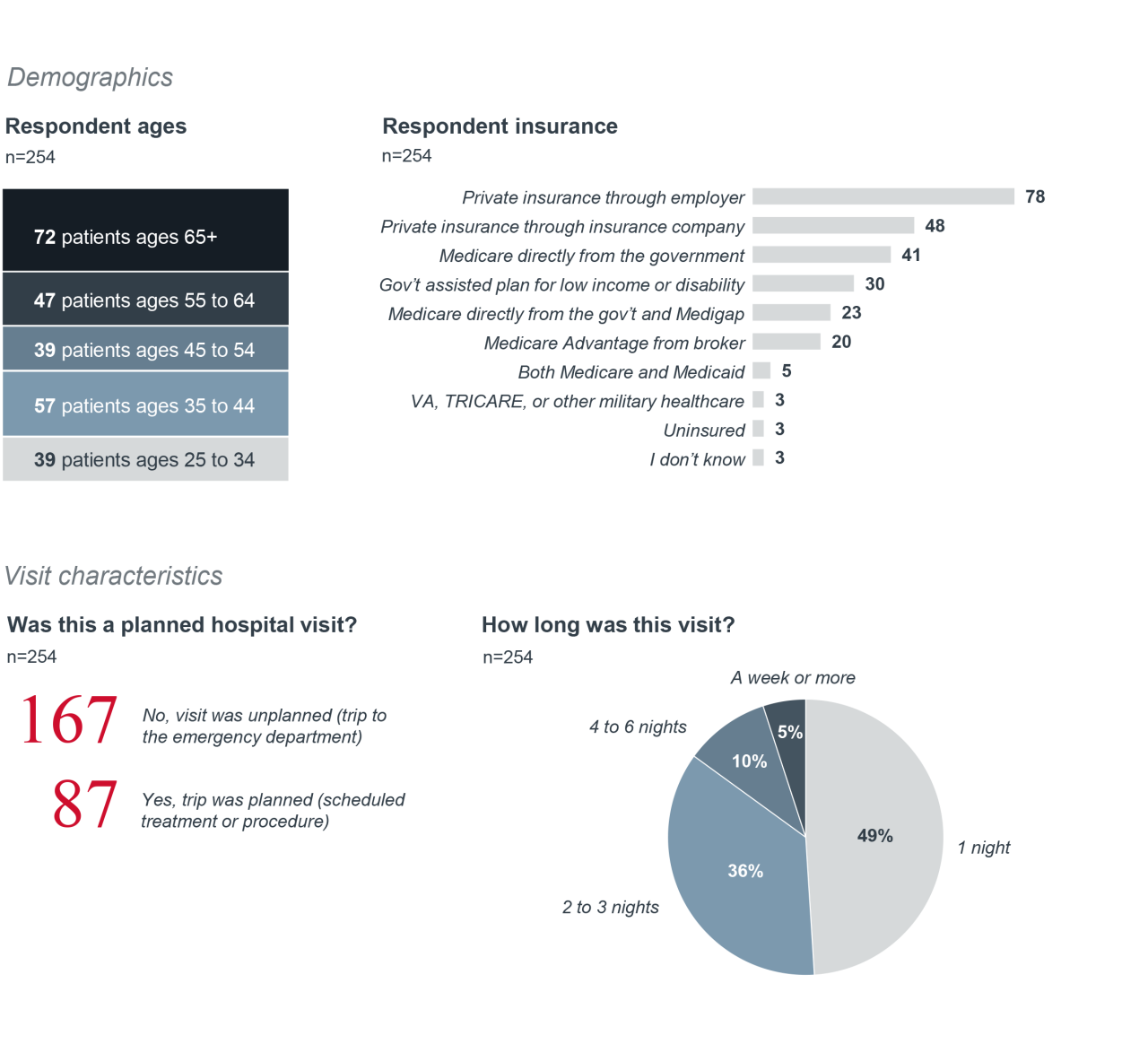
To better understand the patient experience, Advisory Board partnered with Care Logistics to survey 254 patients about their perceptions of a recent acute-care hospital stay. Launched in March 2026, the survey identified the aspects of an inpatient hospital stay that impact efficiency, drive satisfaction, create frustration, and influence whether patients would recommend their care experience to others. Respondents represented a range of age groups and insurance types, with the largest share of responses coming from adults ages 65 and older and patients with employer-sponsored private health insurance.
These survey insights were presented to and reviewed by executives from leading health systems. Their reactions and perspectives are reflected in the findings of this report. Unless otherwise noted, all chart data in this report comes from the patient survey.
3 key findings
Based on the survey, we found that operational efficiency initiatives may not always align with what patients value most. While hospitals often focus on metrics such as length of stay and throughput, patients tend to experience efficiency through timely access to care, clear communication, and a well-coordinated care journey. Understanding those priorities can help organizations advance operational goals while maintaining a positive patient experience.
What we found
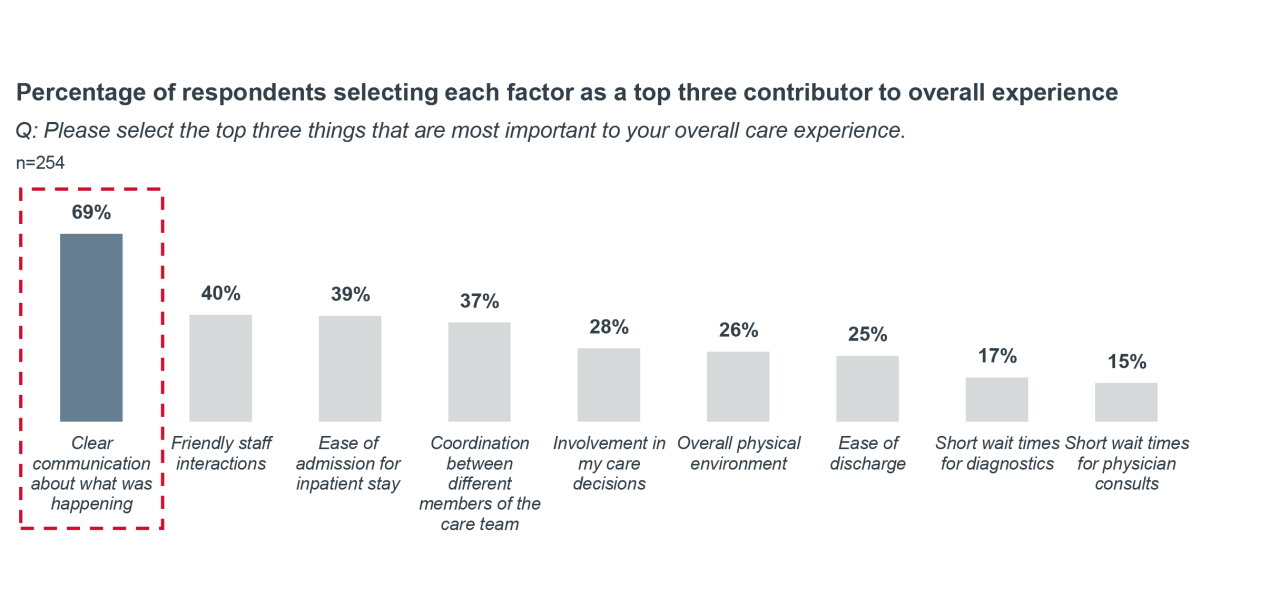
While patients value efficiency, data shows that communication plays a more significant role in how they evaluate their overall experience. When asked directly, 84% of patients said care efficiency is either "very important" (54%) or "the most important" (30%) aspect of their hospital stay. Though when asked about a variety of factors, communication emerged as the strongest driver of satisfaction. Sixty-nine percent of patients selected "clear communication about what's happening" among the three most important contributors to their care experience, and 44% identified it as the single most important factor overall.
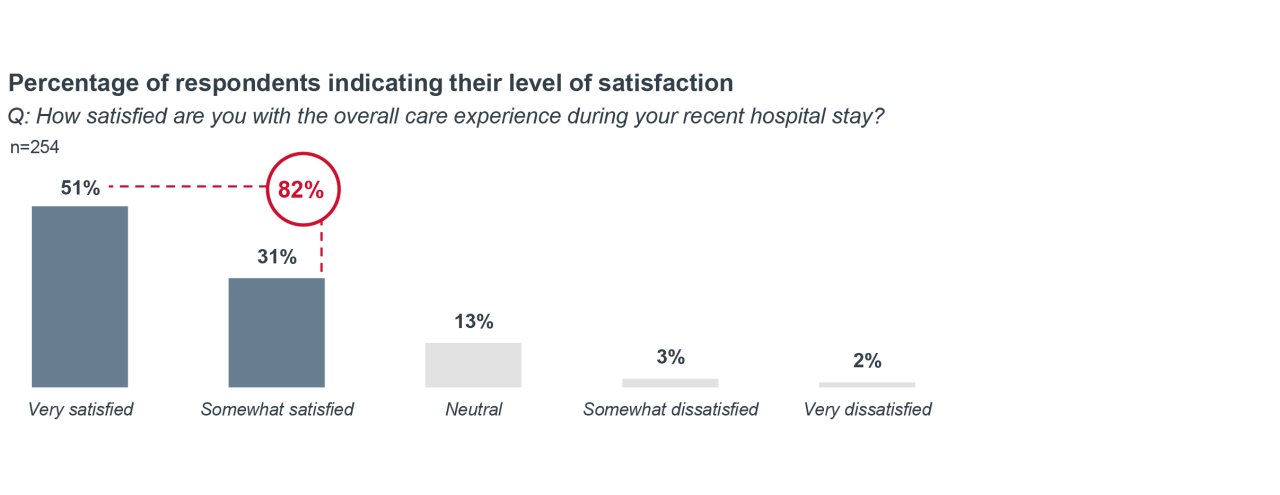
Forty-two percent of patients reported that their stay lasted longer than expected, and 42% said some or all delays were preventable. At the same time, the vast majority (82%) remained somewhat (31%) or very satisfied (51%) with their overall care experience. Patient satisfaction stays high even though care delays are common, likely due to the majority of patients reporting that they experienced clear and timely communication.
Why does this matter?
Patients perceive efficiency differently than many healthcare leaders measure it. While leaders often focus on metrics such as length of stay, discharge timing, and throughput, our findings suggest that patients evaluate efficiency through their understanding of what's happening and confidence that their care is progressing as planned. Although care efficiency remains highly important to patients, communication often shapes whether care feels coordinated, responsive, and well-managed. When communication is strong, delays appear less likely to undermine the overall care experience.
Key strategies leaders should consider
Healthcare leaders should recognize communication as a way to make efficiency more visible to patients and improve overall experience. In addition to shaping patient experience, communication plays a critical role in aligning care teams around a shared plan — a core component of operational efficiency. Hospitals and health systems can strengthen communication between care team members and with patients by focusing on three strategies.
Strategy 1: Align care teams around a shared plan. Communication with patients starts with communication within the care team. Consistent messaging requires physicians, nurses, case managers, and other stakeholders to share a common understanding of a patient's status, care plan, barriers, and next steps.
- Daily alignment huddles: Unit-based huddles bring key stakeholders together to review patient progress, surface bottlenecks, and assign ownership for resolving issues before they create downstream delays. These huddles help ensure consistent communication across roles while shifting problem-solving from reactive to proactive.
Sample huddle questions include:
|
Strategy 2: Equip everyone with the same information. Communication is only as effective as the information behind it. Incomplete, outdated, or inconsistent information can lead to conflicting messages, unrealistic expectations, and avoidable delays.
- Data-informed communication: A shared view of patient progression helps teams communicate more consistently with one another and with patients. Key information should include:
- Expected discharge timeline (EDD/LOS)
- Current patient status and pending actions
- Key clinical context and care plan
- Real-time barriers and bottlenecks
- Patient-specific social and historical factors
- Standardized care pathways
- Clear explanations for delays
- Operational metrics, such as LOS and test turnaround times
"You’ve got to have technology that makes all those processes visible, and it’s got to point the user to what is red, what is the problem …Then you’ve got the people to make it operational. So, people, processes, and technology must work in tandem."
Jim Griffith, SVP/Chief Strategy Officer
Mary Washington Healthcare
When care teams work from the same source of truth, they can provide clearer expectations and more consistent updates throughout a patient's stay.

Strategy 3: Communicate clearly and consistently. Even when the right information exists, it must be delivered in a way that's timely, understandable, and accessible to patients and families.
- APP-led communication: Specialists often round early in the day and have limited time with patients and families. As a result, important updates may be delivered when family members aren't present or communicated too quickly for patients to fully understand. Some organizations have expanded the role of advanced practice providers (APPs) as dedicated communicators. Rather than replacing specialists, APPs serve as an extension of the care team, helping patients and families understand care plans, ask questions, and receive updates throughout the day.
- Technology-enabled communication: The traditional model of one or two physician touchpoints per day doesn't always meet patients’ expectations for ongoing communication. Tools that can keep patients informed about their care between in-person interactions include:


"The care that happens is the right care, but patients have no concept of it. As we're able to create a pathway that allows that communication to the patient and their family, that's the most important way of doing it."
Chief Medical Officer
Non-profit regional healthcare provider

"I don’t want to just use another technology solution. I’d like to make sure we’re focusing on the human part of it — the expectations, the communication, the next steps. And then use technology to support and make it easier to do that reliably."
Chief Operating Officer
Regional health system
What we found
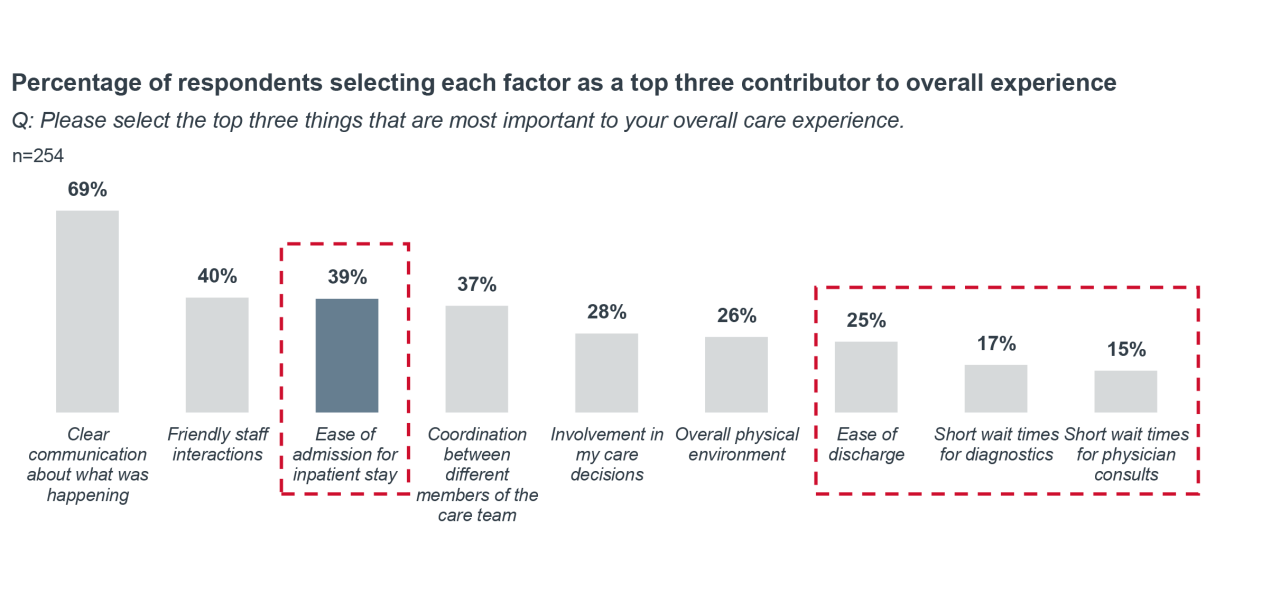
Patients are more concerned about accessing care than the time they spend receiving it. In the survey, patients ranked ease of admission as more important (39%) to the overall care experience than ease of discharge (25%). Though crucial for overall efficiency, patients rank short wait times for physicians (15%) and diagnostic testing (17%) among the least important contributors to the overall care experience, highlighting patient focus on front-end access and relatively little emphasis on wait times during the stay itself. Patients also ranked delays in receiving information (21%), long waits before being admitted (20%), and difficulty getting help when needed (18%) ahead of long discharge wait times (11%) as reasons they wouldn’t recommend or return to a hospital.
Percent of respondents selecting each factor as a reason to not recommend or return
Q: Which of the following aspects from your care experience would make you not recommend this provider or return to this hospital/health system?
| Factors | Percentage |
|---|---|
None | 44% |
Delays in receiving information (e.g., tests, results, treatments) | 21% |
Long wait times before being admitted | 20% |
Difficulty getting help when needed (e.g., response to call button) | 18% |
Confusion about my care plan (e.g., treatment, medications) | 15% |
Poor communication from the care team | 14% |
Having to repeat the same information to multiple people | 14% |
Frequent care disruptions | 12% |
Unfriendly or unprofessional staff | 12% |
Long wait times before being discharged | 11% |
Room comfort or cleanliness issues | 11% |
Poor coordination between care team members | 9% |

Patients perceive delays as stemming from operational rather than clinical issues. Patients identified waiting for paperwork or admission orders (24%) and waiting for a bed to be cleaned or prepared (22%) as the most common causes of admission delays, followed by no bed being available (17%) and transportation delays (15%). Among delayed bed moves, 70% are tied to bed cleaning. Patients also view discharge delays as non-clinical in nature, identifying discharge paperwork as the primary reason patients wait to leave the hospital (65%).
Why does this matter?
The access and efficient admission that patients value is the product of whole-system flow. Although patients can easily identify delays at the front door, many of the factors driving those delays originate elsewhere in the hospital. Delayed discharges, bottlenecks in testing or consults, and bed turnover challenges all reduce capacity for incoming patients. Patients may not see the work required to improve throughput, reduce length of stay, or accelerate discharges, but they experience the results through faster access to care. Improving patient access therefore requires a whole-system approach that addresses barriers across the care journey rather than optimizing individual departments in isolation.
"So many emergency departments have boarding issues … people end up in hallways where they’re in an admitted status, but don’t feel like they’re admitted to the hospital. That’s very frustrating."
Chief Medical Officer
Non-profit regional healthcare provider
Key strategies leaders should consider
Improving access requires addressing the operational barriers that limit capacity across the hospital. Here are two strategies that can help organizations free up inpatient capacity and improve patient flow across the care journey.
Strategy 1: Streamline steps across the care journey. Many of the delays patients experience are rooted in breakdowns during transfers and bed management. Improving visibility into patient progression and assigning ownership for each step can reduce bottlenecks throughout the system.
- Centralized flow management: Command center models provide real-time visibility into patient location, discharge readiness, transfer status, and operational bottlenecks across the organization. By centralizing flow management, hospitals can move beyond department-level optimization and coordinate decisions across the system, improving patient movement from admission through discharge.
Strategy 2: Shift from first come, first served to prioritized flow. Traditional workflows often move patients through the system based on queue order rather than overall impact on patient flow. Prioritization strategies help organizations address barriers that are preventing discharge and creating upstream bottlenecks.
- Prioritization logic: Testing, consults, and other care activities should be prioritized based on clinical urgency, expected discharge timing, and overall impact on throughput rather than solely on order of arrival. This approach helps remove barriers for patients who are closest to discharge while improving flow across the organization.
- Reverse rounding: Traditional physician rounding often prioritizes patients by clinical acuity, leaving discharge-ready patients later in the workflow. When clinically appropriate, reverse rounding flips that sequence. By prioritizing patients expected to leave the hospital, teams can confirm readiness and address discharge barriers earlier in the day. Treating discharges as planned events rather than day-of decisions accelerates bed turnover, creating capacity for admissions, transfers, and bed placement across the system.
What we found
Diagnostic testing and discharge planning are opportunity areas where coordination beyond the inpatient visit can improve operational efficiency.
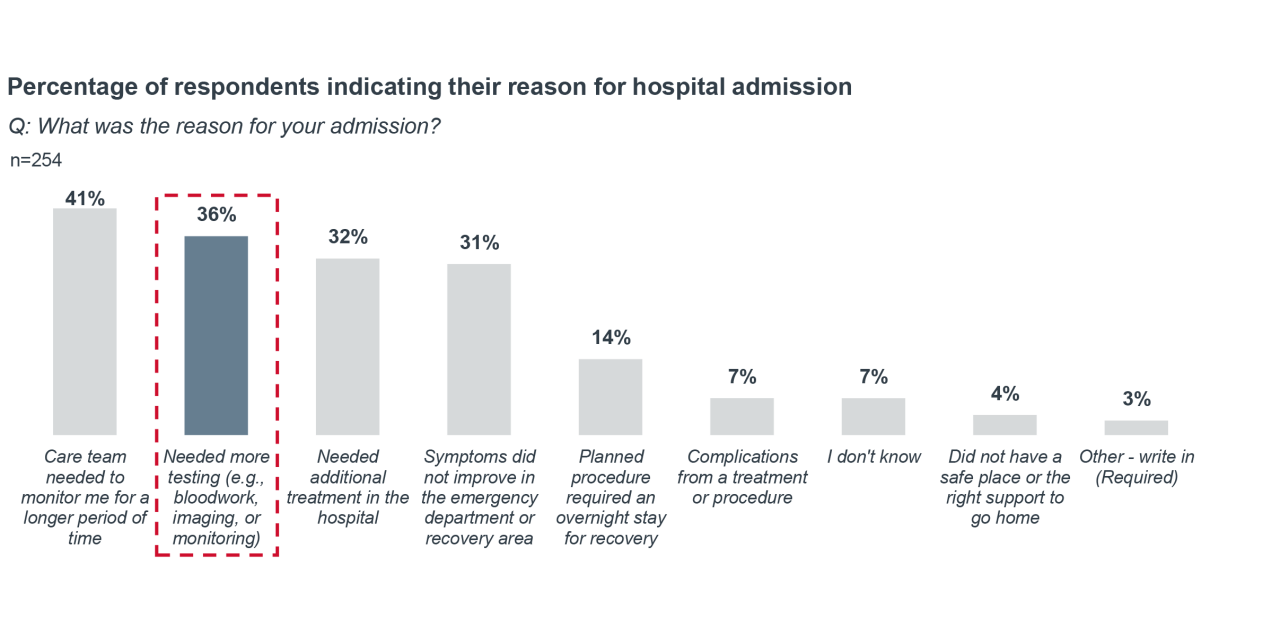
Diagnostic tests are a common part of the patient experience, with blood tests (86%), CT scans (57%), ECGs (57%), X-ray imaging (56%), and MRIs (40%) among the most frequently performed services. While these tests are important for determining whether patients should be admitted, excess diagnostic testing contributes to waste and extended length of stay. More than one-third of patients (36%) report that additional testing is the primary reason for their admission. However, these resource-intensive tests are not always time-sensitive and could safely take place in outpatient rather than inpatient care settings.

*See endnote 4.
In hospital settings, there is a default bias toward overtesting and a long-standing "when in doubt, admit" mentality. While mainly well-intentioned, this kind of defensive medicine can contribute to overtreatment by extending hospital stays and consuming capacity, without meaningfully improving patient outcomes. Patients can also contribute to this dynamic, often expecting a “do everything while admitted” approach. New advisors, including social media and AI chatbots, can also contribute to this issue by influencing the treatments patients ask for, even when they're not medically necessary.
"Patients often want nonurgent issues addressed during a hospital stay, but many of those needs are more appropriately managed in the ambulatory setting. Accommodating nonurgent issues in the inpatient setting backs everything up, creating a bottleneck for admissions. We need to provide the right care at the right time in the right place."
Dr. Brad Mock, EVP/Chief Physician Executive
AnMed Health
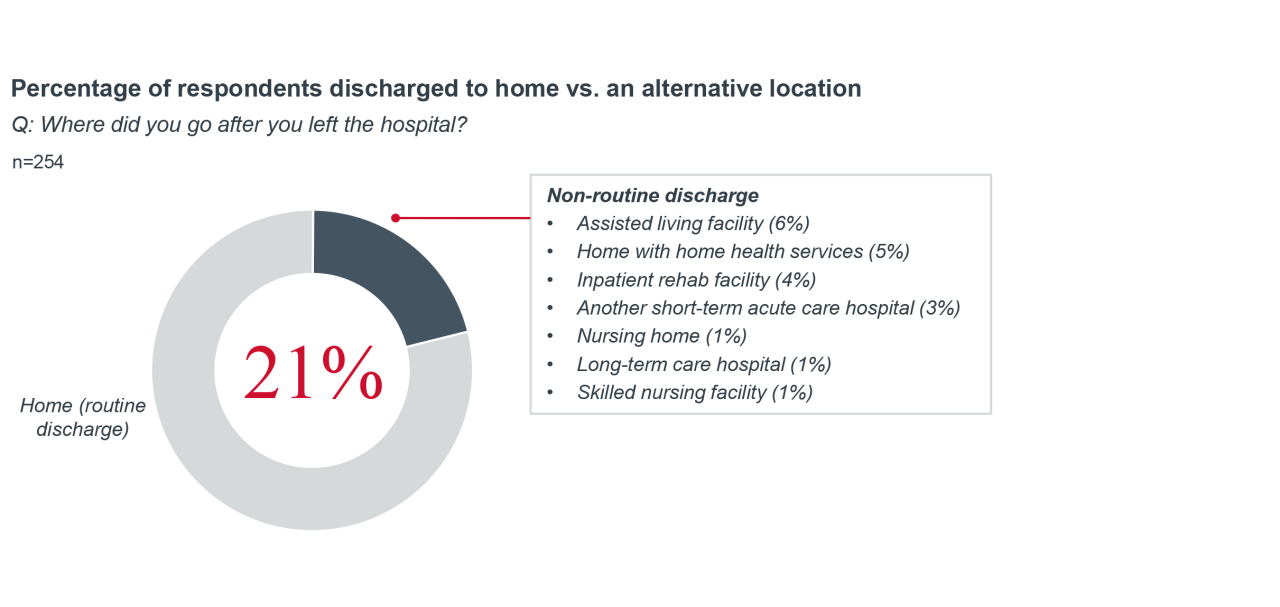
At the other end of the care journey, many patients remain hospitalized while post-discharge services or follow-up arrangements are finalized. Hospitals become a holding environment when there are challenges or discharge delays, especially for patients who can’t go home. More than one in five patients (21%) have a non-routine discharge, with many leaving the hospital for another care setting rather than returning home, underscoring the importance of coordinating care across multiple settings.
Why does this matter?
Stronger continuity of care beyond the hospital stay can reduce avoidable admissions, preserve capacity, and ensure patients receive care in the most appropriate setting. Though, hospital-based care has long been treated as the default, causing leaders to overlook gains that could be made by moving away from this care model. Historically, limited outpatient access has further reinforced overreliance on inpatient care. However, things are shifting. Health system leaders report increasing capital expenditures on new ambulatory facilities, while spending on new inpatient facilities has fallen significantly over the past three years.1 With fewer organizations expanding inpatient capacity, leaders increasingly need to create capacity within existing hospitals by reducing unnecessary utilization and ensuring patients receive care in the most appropriate setting.
"Doctors worried that patients wouldn’t follow through with outpatient care, and then they’d be liable. So now we arrange for that patient’s MRI before they leave, and that’s freed up a lot of bottlenecks and beds."
Dr. Christopher Newman, President/Chief Executive Officer
Mary Washington Healthcare
Still, clinicians in the inpatient space often feel a lack of influence when it comes to coordinating with ambulatory and post-acute care providers. They also risk negatively impacting patient satisfaction by deferring care during a hospital stay. To support appropriate use of alternative care settings, organizations must strengthen coordination across the care continuum so clinicians can confidently refer and discharge patients.
Key strategies leaders should consider
Some opportunities to improve operational efficiency lie outside the inpatient stay. Reducing unnecessary admissions requires stronger coordination across the continuum and clearer pathways to care.
Strategy 1: Strengthen coordination across the care continuum. Patients often remain in the hospital while waiting for discharge arrangements or tests and follow-up services that could be delivered in alternative sites of care.5,6 Better alignment across inpatient, outpatient, and post-acute settings can reduce unnecessary hospital days without disrupting patient care.
- Integrated inpatient-outpatient workflows: When the next site of care is identified and scheduled before discharge, physicians can be more confident that patients will follow up for care in the more appropriate setting. Greater visibility between inpatient and outpatient settings helps organizations more effectively coordinate transitions and prevent gaps in care.

- Extend coordination beyond discharge: Effective discharge planning goes beyond clinical instructions to include patient education, expectation setting, scheduling assistance, and transportation coordination. These steps help patients navigate the transition to the next level of care and reduce post-discharge disruptions. Use of discharge lounges can further enhance throughput by freeing inpatient beds while administrative tasks are finalized, without patients feeling rushed.
Strategy 2: Create alternatives to unnecessary admission. According to our survey, many admissions are driven by monitoring needs (41%), additional testing (36%), or unresolved symptoms (31%). These are often situations where faster diagnostic decision-making can prevent unnecessary inpatient stays.
- Real-time review of inpatient diagnostic testing: Organizations should regularly evaluate inpatient testing orders to identify opportunities to move nonurgent services to outpatient settings. Conducting these reviews in real time, rather than after the fact, can help prevent unnecessary hospital days while increasing capacity in diagnostic service lines. This often requires a centralized team or role with visibility into orders, queues, and patient status to make live prioritization decisions.
- Observation management pathways: Organizations should establish clear inpatient-versus-observation criteria, defined decision timelines, and prioritized diagnostics for patients whose status remains uncertain. The goal is to reach an admission or discharge decision as quickly and safely as possible rather than defaulting to a full inpatient stay.
Strategy 3: Design systems that support appropriate utilization. Reducing avoidable admissions requires addressing contributing behaviors and assumptions.
- Standardized care protocols: Well-designed pathways and workflows can reduce variation in decision-making and help limit defensive medicine behaviors that contribute to unnecessary testing and admissions. Protocols should be specific, measurable, and reinforced through incentives and performance expectations.
- Reframe efficiency as better care: Longer stays don’t always lead to better outcomes. Patients and clinicians should understand that reducing non-value-added time in the hospital can improve safety, lower costs, and preserve capacity for patients who need acute care most. With 85% of respondents indicating they have a primary care provider, clinicians can use primary care visits and other touchpoints to educate patients on seeking care in the most appropriate, cost-effective setting. Efficient care is not about immediacy or convenience. It is care delivered in the right setting, at the right time, for the right reason.
"If the care process is protocolized, then it feels more protected."
Daniel Chibaya, VP/Chief Operating Officer
Montage Health
Parting thoughts
The findings in this report point to a common theme: patients, clinicians, and healthcare leaders all value efficient care, but they don't always experience it in the same way. Patients value efficiency, but they experience it through access to care, clear communication, and confidence that their care is progressing as planned. However, many of the processes that make an efficient care experience possible — from care coordination and discharge planning to bed management and patient flow — remain largely invisible to patients.
Call to action
Healthcare organizations should consider how operational efficiency and patient experience influence each other, instead of treating them as separate priorities. Improving patient throughput creates capacity and access. Strong communication improves satisfaction and helps patients understand and recognize efficiency. Together, they shape how patients evaluate their care and whether they choose to return.
Success depends on creating alignment across the care continuum. Organizations should focus on building buy-in around efficiency initiatives, strengthening coordination between teams, and helping patients understand what to expect throughout their care journey. They should also challenge the assumption that acute care is always the default destination for care delivery. Helping clinicians and patients view acute care as the backstop of the continuum can reduce unnecessary utilization, improve patient flow, and create a more connected care experience.
Patients may forgive delays when they're kept informed, but they still expect care to be timely, coordinated, and responsive. The organizations best positioned for success will be the ones that improve all three by aligning operational goals with the needs of frontline clinicians and the expectations of patients.
"Patients don't experience healthcare as separate departments, handoffs, or operational processes. They experience one journey. Our responsibility is to make that journey timely, coordinated, and easy to navigate. When we get those things right, we not only improve the patient experience, but we also create a more effective and sustainable healthcare system."
Theresa Trivette, System Chief Nurse Executive
Valley Health
1 Nives M, Wiles E, et al. Survey insights: The 5 trends redefining health system strategy in 2026. Advisory Board. June 8, 2026.
2 Shrank WH, Rogstad TL, et al. Waste in the US health care system: estimated costs and potential for savings. JAMA. October 7, 2019
3 Site-of-care shifts: Healthcare’s $50B opportunity. Advisory Board. June 6, 2024.
4 Hospital Expenses per Adjusted Inpatient Day (2024). KFF. Accessed July 29, 2026.
5 Milligan C, Teicher B. New AHA Report Finds Delays in Ability to Discharge Patients Increase Strain on Patients and Hospitals. American Hospital Association. December 6, 2022.
6 Robinson NB, Gao M, et al. Secondary review reduced inpatient MRI orders and avoidable hospital days. Clinical Imaging. November 19, 2021.
Care Logistics® helps health system leaders who are frustrated with their organization’s persistent operational challenges. Our proven operational model simplifies healthcare operations and provides a foundation for improved performance. The supporting CareEdge by Care Logistics technology delivers a complete, real-time view of your operations by identifying patterns and trends that would otherwise be invisible. Its AI-driven agents remove throughput bottlenecks, create positive margins, and unlock capacity without capital expansion. The result? Efficient operations, accelerated growth, and the best patient care possible.
Learn more about Care Logistics
This report is sponsored by Care Logistics®, an Advisory Board member organization. Representatives of Care Logistics helped select the topics and issues addressed. Advisory Board experts wrote the content, maintained final editorial approval, and conducted the underlying research independently and objectively. Advisory Board does not endorse any company, organization, product or brand mentioned herein.
To learn more, view our editorial guidelines.

This report is sponsored by Care Logistics®. Advisory Board experts conducted the research and maintained final editorial approval.

Don't miss out on the latest Advisory Board insights
Create your free account to access 1 resource, including the latest research and webinars.
Want access without creating an account?
You have 1 free members-only resource remaining this month.
1 free members-only resources remaining
1 free members-only resources remaining
You've reached your limit of free insights
Become a member to access all of Advisory Board's resources, events, and experts
Never miss out on the latest innovative health care content tailored to you.
Benefits include:
Unlimited access to research and resources
Member-only access to events and trainings
Expert-led consultation and facilitation
The latest content delivered to your inbox
You've reached your limit of free insights
Become a member to access all of Advisory Board's resources, events, and experts
Never miss out on the latest innovative health care content tailored to you.
Benefits include:
Unlimited access to research and resources
Member-only access to events and trainings
Expert-led consultation and facilitation
The latest content delivered to your inbox
This content is available through your Curated Research partnership with Advisory Board. Click on ‘view this resource’ to read the full piece
Email ask@advisory.com to learn more
Click on ‘Become a Member’ to learn about the benefits of a Full-Access partnership with Advisory Board
Never miss out on the latest innovative health care content tailored to you.
Benefits Include:
Unlimited access to research and resources
Member-only access to events and trainings
Expert-led consultation and facilitation
The latest content delivered to your inbox
This is for members only. Learn more.
Click on ‘Become a Member’ to learn about the benefits of a Full-Access partnership with Advisory Board
Never miss out on the latest innovative health care content tailored to you.
Benefits Include:
Unlimited access to research and resources
Member-only access to events and trainings
Expert-led consultation and facilitation
The latest content delivered to your inbox
