Auto logout in seconds.
Continue Logout
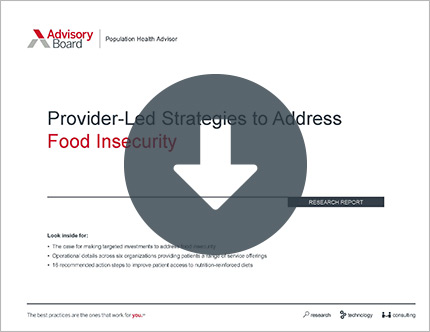
One in six households experience food insecurity, which means they have limited or uncertain access to nutritionally adequate and safe food. Individuals who are food insecure are two times as likely to suffer from diabetes and are three times as likely to have poor overall health status.
When you consider these realities and the fact that many non-profit hospitals serve food deserts—areas devoid of healthy or nutritious food options—there is a largely untapped opportunity for providers to better serve the community while achieving population health objectives.
Recognizing the link between food insecurity, chronic illness, and poverty, several hospitals have launched innovative programs designed to facilitate patients' access to healthy, affordable food.
This research report provides best practice models for implementing programs to address food insecurity, including details on:
- Patient identification and referral pathways
- Range of services offered
- Common community partners
- Considerations for staffing
- Tactics for patient and staff engagement
Download the report to learn from seven provider organizations that represent a broad range of food insecurity interventions and get 16 action steps for improving patient access to nutrition-reinforced diets.

Don't miss out on the latest Advisory Board insights
Create your free account to access 1 resource, including the latest research and webinars.
Want access without creating an account?
You have 1 free members-only resource remaining this month.
1 free members-only resources remaining
1 free members-only resources remaining
You've reached your limit of free insights
Become a member to access all of Advisory Board's resources, events, and experts
Never miss out on the latest innovative health care content tailored to you.
Benefits include:
Unlimited access to research and resources
Member-only access to events and trainings
Expert-led consultation and facilitation
The latest content delivered to your inbox
You've reached your limit of free insights
Become a member to access all of Advisory Board's resources, events, and experts
Never miss out on the latest innovative health care content tailored to you.
Benefits include:
Unlimited access to research and resources
Member-only access to events and trainings
Expert-led consultation and facilitation
The latest content delivered to your inbox
This content is available through your Curated Research partnership with Advisory Board. Click on ‘view this resource’ to read the full piece
Email ask@advisory.com to learn more
Click on ‘Become a Member’ to learn about the benefits of a Full-Access partnership with Advisory Board
Never miss out on the latest innovative health care content tailored to you.
Benefits Include:
Unlimited access to research and resources
Member-only access to events and trainings
Expert-led consultation and facilitation
The latest content delivered to your inbox
This is for members only. Learn more.
Click on ‘Become a Member’ to learn about the benefits of a Full-Access partnership with Advisory Board
Never miss out on the latest innovative health care content tailored to you.
Benefits Include:
Unlimited access to research and resources
Member-only access to events and trainings
Expert-led consultation and facilitation
The latest content delivered to your inbox
