Auto logout in seconds.
Continue Logout
Welcome to "Field Report," a new series where Advisory Board experts weigh in on what they are hearing from health care organizations across the county. In this edition, Deirdre Saulet shares findings from a recent survey and conversations with cancer programs across the country on how they're responding to Covid-19 and what concerns them most in the coming months.
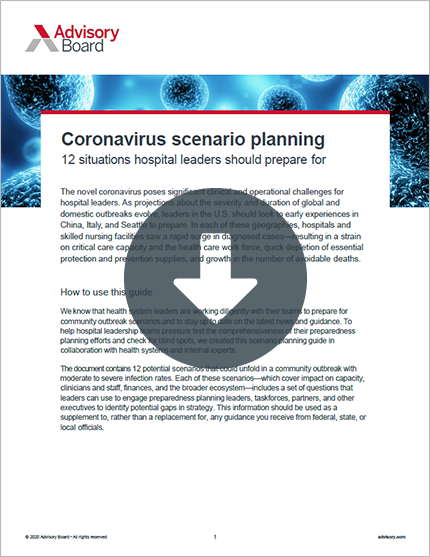
Starter list: How you can support frontline staff during the Covid-19 crisis
Unlike most other parts of the health system, which have delayed or moved care virtual, cancer patients and providers often don't have the ability to postpone or stop treatment. To get a better idea of how cancer programs are responding to the Covid-19 crisis, we surveyed 55 cancer program leaders the first week of April and organized small, ongoing networking forums for them. Here's what we've learned.
Interested in participating in our Covid-19 networking forums for oncology leaders? Email me at sauletd@advisory.com for more information.
Core oncology services not slowing down much—if at all
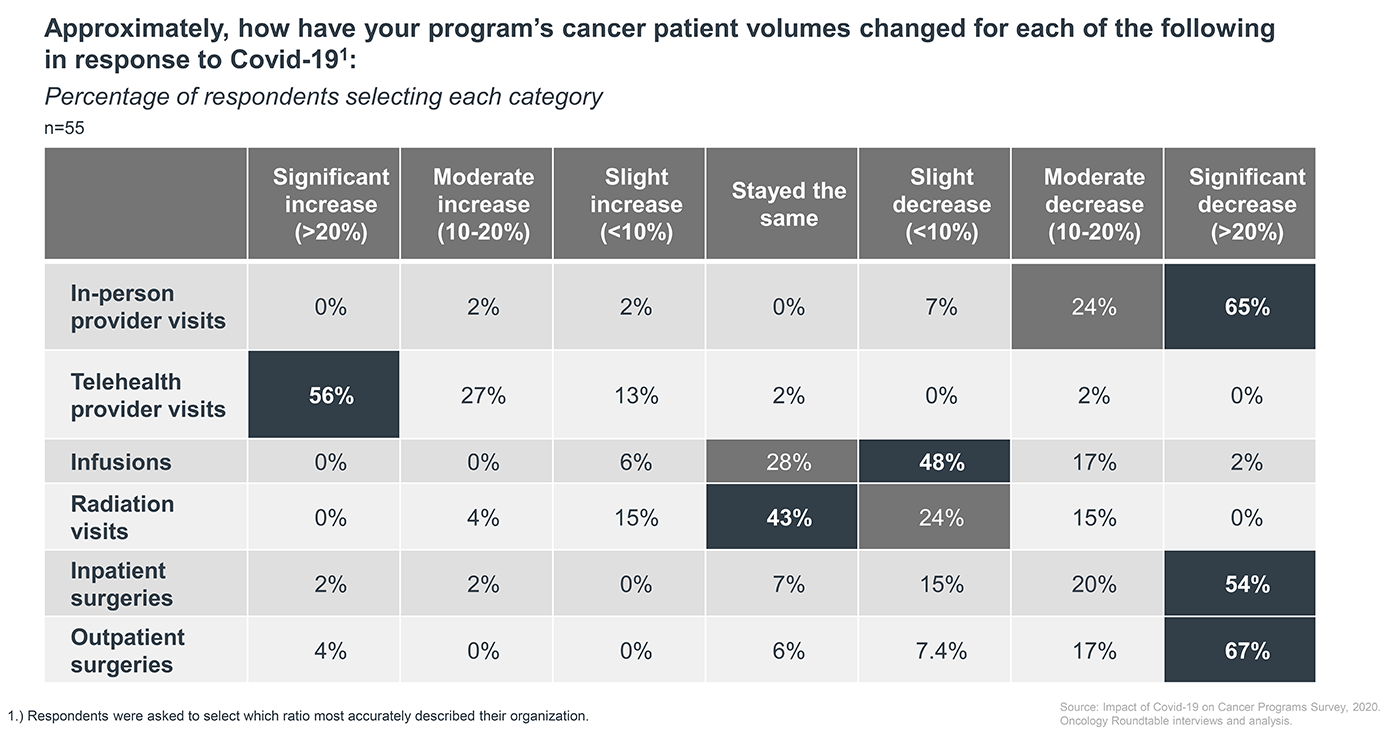
As expected, a significant number of in-person provider consults have moved to virtual channels, and cancer surgical volumes have significantly decreased as hospitals have delayed non-urgent, "elective" surgeries.
Underscoring the fact that many cancer patients can't afford—nor do they want—to wait for treatment, demand for the core cancer program services, namely, infusion and radiation, remains relatively stable.
For infusion, nearly half of all programs say their volumes have decreased less than 10%, and 28% of programs say infusion volumes have stayed steady. While 17% of respondents did say that they've experienced a moderate (between 10% and 20%) decrease in infusion volumes, conversations with cancer program leaders suggests that the decrease is mostly coming from non-chemo infusions.
The demand for radiation therapy has remained even more constant. Over 42% of respondents say radiation volumes have stayed the same, while 24% have seen a slight decrease. In fact, 15% of respondents have actually seen a slight increase in volumes. Given that radiation is often downstream of surgery and chemo, we expect to see a slight dip in radiation volumes in the coming weeks as new patient referrals from those upstream channels slow down.
For cancer programs, a top challenge is meeting steady—if not increased—patient demand for care in the face of heightened safety precautions and organizational cost-cutting, including mandatory furloughs. And as other parts of the health system look to open back up, cancer programs must plan for the inevitable ebb and flow in patient volumes, resulting from new cancer diagnoses that were put on hold for weeks or even months.
With the exception of telehealth consults, programs aren't radically moving patients to alternate sites of care
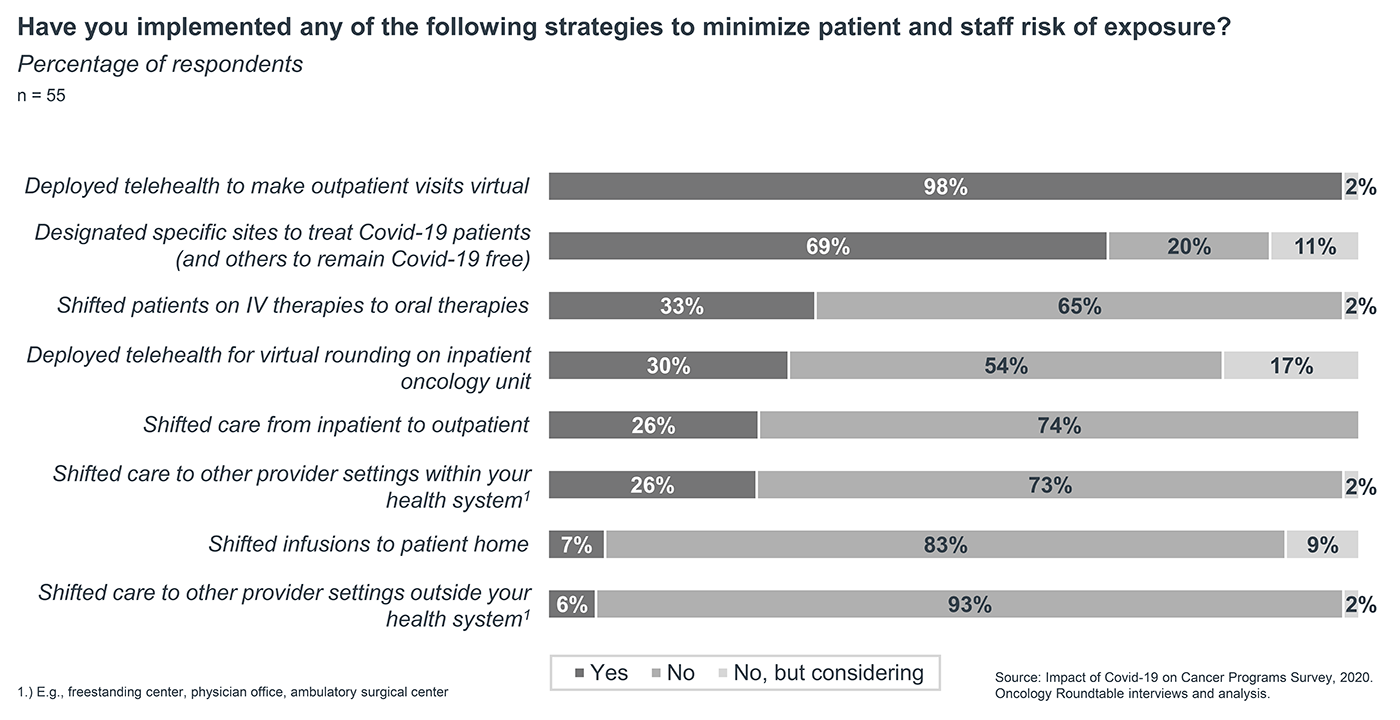
If volumes remain high during the pandemic, the other immediate concern is minimizing cancer patients' risk of exposure. In our survey, we asked specifically about which strategies cancer programs are using that will ultimately impact where and how care is delivered.
Nearly every respondent has already deployed telehealth to move outpatient visits to virtual platforms. Far fewer have looked to other ways to keep patients out of hospital-based cancer centers. One-third have shifted patients on IV therapy to oral therapies, which has the obvious limitation of requiring a comparable oral drug. Just over 25% have shifted care from inpatient to outpatient when possible, as well as moving care to other, Covid-free settings within their own health system, such as a freestanding or ambulatory surgical center. Although we didn't ask about this in our survey, we've received questions about how programs are treating Covid-positive cancer patients. While some organizations have decided they'll pause active treatment for this population, others have gotten creative, such as repurposing underutilized space, such as a dermatology clinic or wig shop, to serve as a negative pressure infusion room specifically for those patients. For Covid-positive radiation patients, many are scheduling them at the end of the day to minimize exposure and allow for full disinfecting of the LINAC and facility.
One question that's been on my mind is whether organizations are shifting infusions to patients' homes—or at least considering it. Only 4 of our 55 respondents said they had done this, and only 5 were considering doing it. Because the upfront resources required to start home infusion are so extensive—from staffing to operations to overcoming regulatory hurdles—it isn't an easy fix in the midst of a pandemic. But the small number of organizations who already have an oncology hospital-at-home or home infusion services, such as Penn's Center for Cancer Care Innovation, can leverage this offering to keep more patients at home.
To keep patients as safe as possible in the outpatient cancer center, check out our previous blog highlighting a number of tactics programs are using, such as pre-screening every patient, extending hours, fast-tracking injections, and much more.
Bracing for long-term impact of Covid-19 on patient volumes, outcomes, and staff burnout
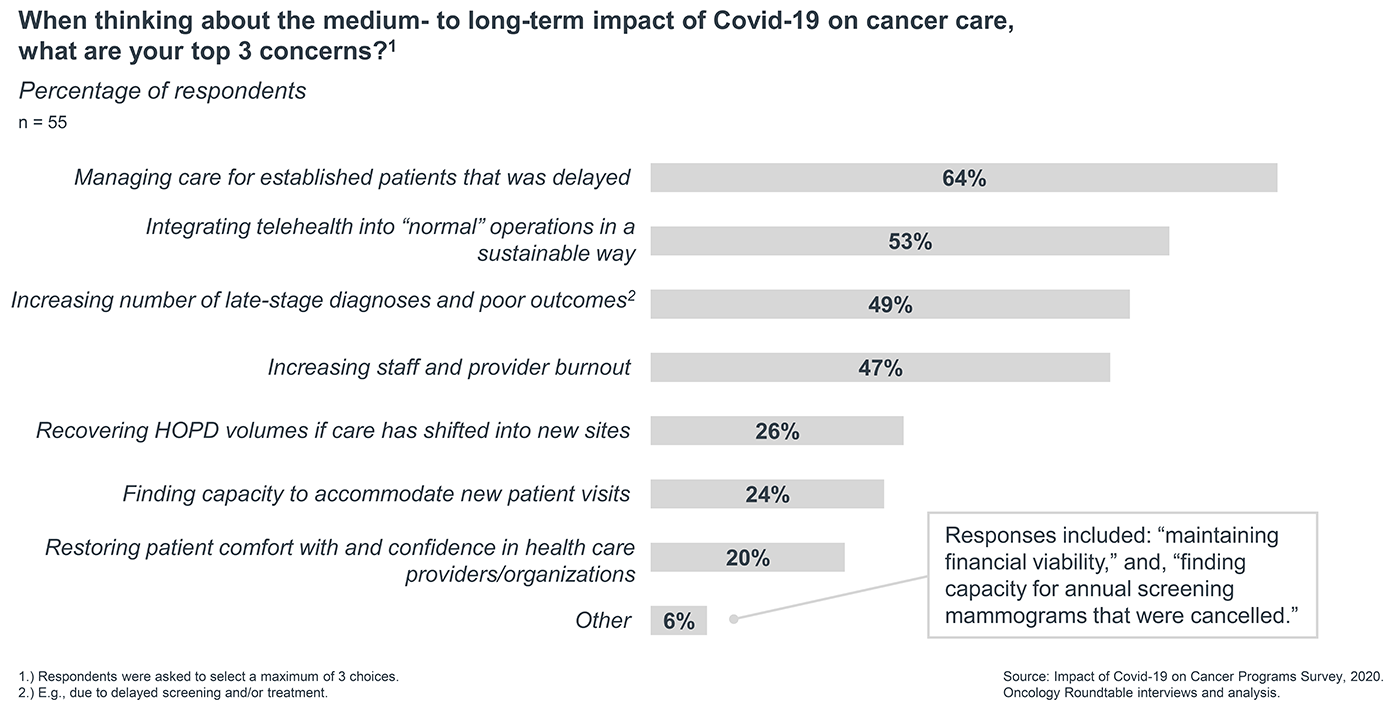
We also asked survey respondents to rank what concerns them most regarding the medium- to long-term impacts of Covid-19 on their programs. Here are their top four concerns:
- Managing care for established patients that was delayed (top concern among 64% of respondents). Oncology volumes are very much dependent on what is occurring in upstream referral sources, specifically primary care and surgery, so program leaders need to be prepared to weather the ups and downs that will likely occur in the coming months given the significant changes to those specialties.
- Integrating telehealth into "normal" operations in a sustainable way (top concern among 53% of respondents). With the rapid uptick in use of virtual care, it's hard to imagine what telehealth in a post-Covid-19 world looks like. Much of this will depend on how much or how little CMS and other payers continue to encourage the use of telehealth. But for cancer programs specifically, it's critical to consider which patients are most appropriate for telehealth following the crisis, and how to ensure they receive a similar level of support and a best-in-class virtual patient experience. For patients and providers who have grown accustomed virtual care, it'll be just as necessary to have a plan in place to ease off telehealth when appropriate and reinstate in-person consults.
- Increased number of late-stage diagnoses and poor outcomes (top concern among 49% of respondents). Primary care and cancer screenings have been put on hold, causing me to wonder about the downstream impact on diagnoses—both how many patients may be missed entirely and if they'll be diagnosed at later stages. For mammography, the biggest challenge will be ensuring access and working through the backlog of queued appointments. For lung cancer screening, organizations need to rethink how they engage referring providers and eligible patients to get them in the door.
- Increasing staff and provider burnout (top concern among 47% of respondents). Covid-19 has fundamentally changed the clinical work environment and leaders are rightfully concerned about their team's resilience and wellbeing. Access our starter list on how to support frontline staff.
You can access the full survey results here. Our sincere thanks to all those who took the time to share their information with us.
Your top resources for Covid-19 readiness
You're no doubt being inundated with a ton of information on how to prepare for patients with the 2019 coronavirus (Covid-19). To help you ensure the safety of your staff and patients, we pulled together the available resources on how to safely manage and prevent the spread of Covid-19.

Don't miss out on the latest Advisory Board insights
Create your free account to access 1 resource, including the latest research and webinars.
Want access without creating an account?
You have 1 free members-only resource remaining this month.
1 free members-only resources remaining
1 free members-only resources remaining
You've reached your limit of free insights
Become a member to access all of Advisory Board's resources, events, and experts
Never miss out on the latest innovative health care content tailored to you.
Benefits include:
Unlimited access to research and resources
Member-only access to events and trainings
Expert-led consultation and facilitation
The latest content delivered to your inbox
You've reached your limit of free insights
Become a member to access all of Advisory Board's resources, events, and experts
Never miss out on the latest innovative health care content tailored to you.
Benefits include:
Unlimited access to research and resources
Member-only access to events and trainings
Expert-led consultation and facilitation
The latest content delivered to your inbox
This content is available through your Curated Research partnership with Advisory Board. Click on ‘view this resource’ to read the full piece
Email ask@advisory.com to learn more
Click on ‘Become a Member’ to learn about the benefits of a Full-Access partnership with Advisory Board
Never miss out on the latest innovative health care content tailored to you.
Benefits Include:
Unlimited access to research and resources
Member-only access to events and trainings
Expert-led consultation and facilitation
The latest content delivered to your inbox
This is for members only. Learn more.
Click on ‘Become a Member’ to learn about the benefits of a Full-Access partnership with Advisory Board
Never miss out on the latest innovative health care content tailored to you.
Benefits Include:
Unlimited access to research and resources
Member-only access to events and trainings
Expert-led consultation and facilitation
The latest content delivered to your inbox
