Auto logout in seconds.
Continue Logout
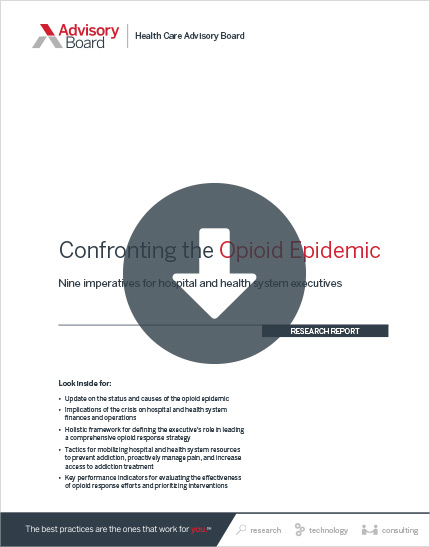
Opioid abuse and addiction have swept across the country flooding hospital and health system emergency departments and inpatient beds with those suffering from addiction and the effects of overdose. Patients, communities, and provider organizations are experiencing the devastating consequences of the opioid epidemic on a daily basis.
Meanwhile, hospital and health system executives have been inundated with headline news related to the opioid crisis. This extensive coverage, while critical for providing context on the situation, can often leave hospital and health system executives feeling overwhelmed and unsure of the best path forward in addressing this mission-critical issue.
This research report provides executives with a framework for crafting a comprehensive and proactive opioid response strategy. The report begins by unpacking the implications of the opioid epidemic on hospitals and health systems specifically. Next, it gives leaders clear guidance on mobilizing an effective approach to addiction prevention, effective pain management, and addiction treatment.
Want more on the latest challenges in health care?
We’d love to bring our research to you—and customize it to target your practice’s priorities.
Unpacking the opioid crisis
The opioid epidemic and its disruptive impact on the health of millions of Americans has exacerbated existing margin pressures and care access challenges. Health care executives must understand these provider-specific operational and financial implications in order to build an effective, comprehensive opioid-response strategy. Read more on p.8 .
Mobilizing an addiction prevention and pain management strategy
Providers and patients have a tangible opportunity to limit the spread of the opioid epidemic by working together to prevent new cases of opioid addiction. By prioritizing alternative means of pain management, they can reduce the prevalence of opioids in the community. Hospital and health system executives should ensure their organizations have the motivation, tools, and support to consistently and effectively reduce the risk of new addiction.
1. Commit to change from the C-Suite (p. 19)
2. Harness existing clinical standardization strategies (p. 20)
3. Create opioid-specific education and protocols (p. 21)
4. Empower the patient to become part of the solution (p. 24)
Maximizing opportunities to deploy addiction treatment
Once providers have started the process of building an addiction-prevention program, the next step is to expand treatment for individuals already suffering from addiction. The executive’s role in this work is partner with clinicians to identify the most effective clinical components of addiction treatment, create triage protocols that ensure the right care is being delivered appropriately throughout the system, and invest resources in expanding broader community access.
5. Base treatment strategy on expansion of MAT (p. 27)
6. Capitalize on hospitalizations to begin treatment (p. 28)
Prioritizing top provider intervention opportunities
Hospital and health system executives will not be able to deploy their full strategies to confront the opioid epidemic all at once. They will need to prioritize potential elements of their organization’s intervention strategy.

Don't miss out on the latest Advisory Board insights
Create your free account to access 1 resource, including the latest research and webinars.
Want access without creating an account?
You have 1 free members-only resource remaining this month.
1 free members-only resources remaining
1 free members-only resources remaining
You've reached your limit of free insights
Become a member to access all of Advisory Board's resources, events, and experts
Never miss out on the latest innovative health care content tailored to you.
Benefits include:
Unlimited access to research and resources
Member-only access to events and trainings
Expert-led consultation and facilitation
The latest content delivered to your inbox
You've reached your limit of free insights
Become a member to access all of Advisory Board's resources, events, and experts
Never miss out on the latest innovative health care content tailored to you.
Benefits include:
Unlimited access to research and resources
Member-only access to events and trainings
Expert-led consultation and facilitation
The latest content delivered to your inbox
This content is available through your Curated Research partnership with Advisory Board. Click on ‘view this resource’ to read the full piece
Email ask@advisory.com to learn more
Click on ‘Become a Member’ to learn about the benefits of a Full-Access partnership with Advisory Board
Never miss out on the latest innovative health care content tailored to you.
Benefits Include:
Unlimited access to research and resources
Member-only access to events and trainings
Expert-led consultation and facilitation
The latest content delivered to your inbox
This is for members only. Learn more.
Click on ‘Become a Member’ to learn about the benefits of a Full-Access partnership with Advisory Board
Never miss out on the latest innovative health care content tailored to you.
Benefits Include:
Unlimited access to research and resources
Member-only access to events and trainings
Expert-led consultation and facilitation
The latest content delivered to your inbox
