Auto logout in seconds.
Continue Logout

Chronic inflammatory skin diseases like alopecia areata and atopic dermatitis disproportionately affect patients from diverse communities due to barriers to access, provider training, and care delivery. This report outlines five system‑level challenges and corresponding strategies that health system leaders can use to improve health equity in dermatology care at their organization.
Methodology
This project examined key strategies to improve health equity in dermatology. To support this work, Advisory Board conducted six hour-long interviews with leading dermatology physicians from six provider organizations across the United States. Participating organizations included five academic medical centers and one private practice dermatology medical group.
The following pages summarize key findings from the research team’s comprehensive literature review and interviews. For each strategy, the team outlined key insights, supporting evidence, additional resources, and guidance to help dermatology programs improve health equity.
In the last 10 years, skin diseases have become the fourth most common cause of nonfatal disease burden worldwide, affecting one in four people in the United States alone.1 Among these, chronic inflammatory skin diseases (CISDs), including alopecia areata (AA) and atopic dermatitis (AD), account for a meaningful share of diagnosed skin conditions. Roughly 700,000 Americans live with active symptoms of AA, and nearly 7 million will experience AA over their lifetime.2 AD impacts 7.6% of U.S. adults,3 and rates continue to rise.4
CISDs like AA and AD can cause significant clinical and psychosocial impacts: Pain5,6 and disrupted sleep5,7 may contribute to diminished quality of life, emotional distress, and feelings of anxiety and depression.8,9 Because these conditions require timely diagnosis, ongoing management, and sustained patient engagement, how health systems design access, specialty care, and continuity of care plays a central role in shaping patient outcomes.
Notably, the burden of CISDs is not evenly distributed. Research shows clear disparities in prevalence, severity, and outcomes that are influenced by gender, race, and socioeconomic status.10-13 Differences in access to care, diagnostic accuracy, and care continuity can contribute to these disparities, which compound as delayed diagnoses, inconsistent management, and lack of specialist access worsen disease burden and patient disengagement over time.
Atopic dermatitis
Patterns of AD prevalence and severity reveal important differences across gender, race and ethnicity, and socioeconomic status. For example, AD is diagnosed more often in women (9.5%) than men (5.7%).3 In addition, while overall AD prevalence is similar across all adult racial groups,14 certain groups have higher rates of severe cases. Among pediatric patients, Black children have a higher prevalence of AD (19.3%) than white children (16.1%).15
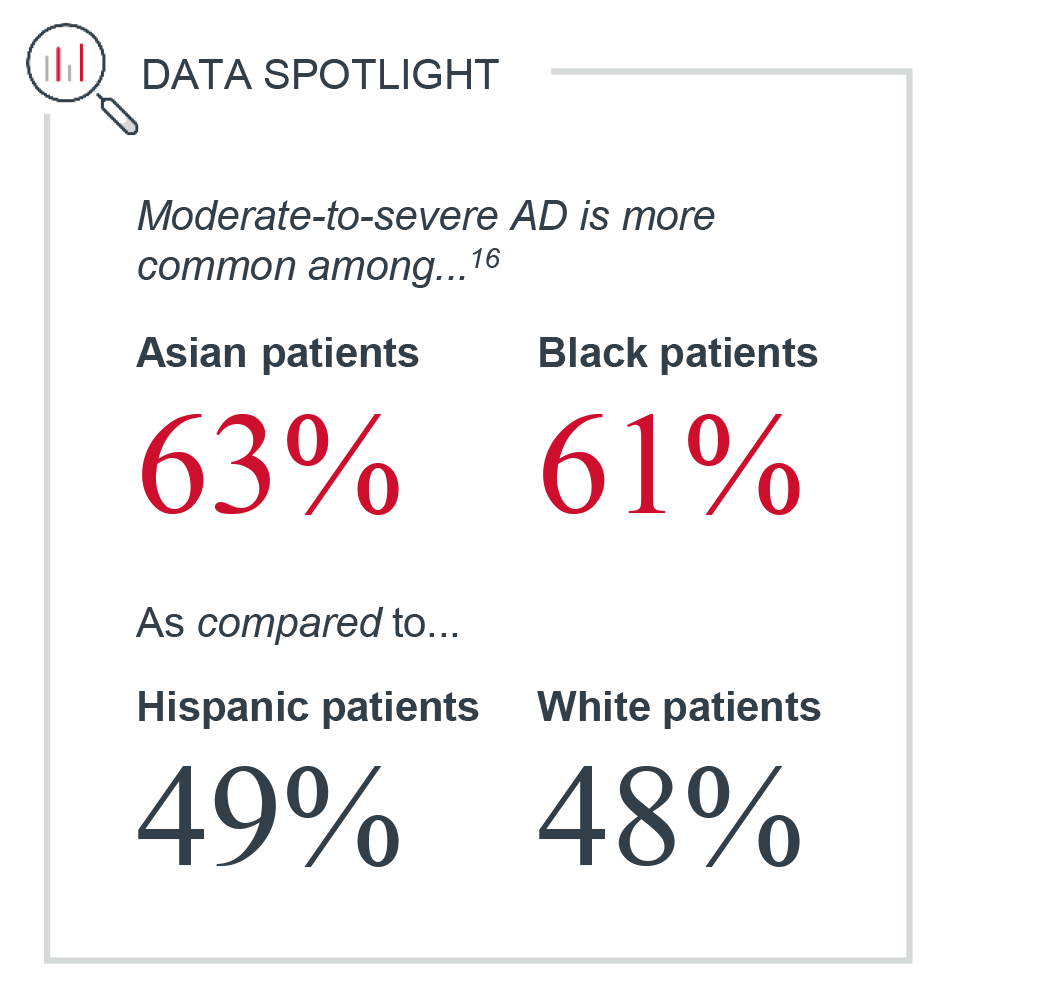
Socioeconomic conditions are associated with the prevalence and severity of AD, often due to limited access to dermatologists, pharmacy deserts,10 and financial barriers to ongoing treatment.11 Notably, socioeconomic factors, such as food insecurity and lack of insurance coverage,12 account for approximately 25% of the observed disparity in AD prevalence between Black and white children.13 This highlights the significant impact of economic and structural conditions on racial inequity in dermatology care.
Alopecia areata
The prevalence of AA reveals similar trends. Women experience AA at higher rates than men.17 Prevalence also varies significantly by race and ethnicity, with AA diagnosed 2.47 times more often among Asian American patients, 1.87 times more often among multiracial patients, 1.35 times more often among Black patients, and 1.26 times more often among Hispanic and Latino patients, relative to white patients.18
67%
Of diagnosed AA cases are women.*
*See endnote 17.
Although AA may appear less prevalent among socioeconomically disadvantaged groups, this is likely due to underdiagnosis rather than a lower disease burden.19 Barriers like a lack of time off work, referrals, insurance coverage, and insurance costs can often delay care until the disease is more severe.
How health systems shape equity in dermatology
Over time, differences in who enters care, how quickly conditions are recognized, and whether patients remain engaged lead to uneven outcomes across populations. Health systems influence many patient touchpoints, including diagnostic accuracy, access to dermatology specialists, and continuity of care. Developing health equity strategies are thus essential to ensuring that patients with AA and AD — particularly those from diverse communities — enter care earlier, stay engaged, and receive appropriate treatment.
This report discusses five concrete challenges that may be heightening disparities in care and offers five strategies to help close those gaps.
5 challenges to health equity in dermatology
Challenge 1: Mistrust and lack of representation limit patient engagement
Prior dismissive experiences and limited representation among providers have led some patients to believe that dermatologic care was not designed with them in mind. As a result, these patients may delay or avoid seeking care, disengage from follow-up care, or remain skeptical of new treatment options.

*See endnote 20.
Mistrust is reinforced by underrepresentation across the dermatology workforce and in clinical research. Dermatology remains one of the least diverse medical specialties, and patients are often unable to receive care from clinicians who share their lived or cultural experiences. Clinical trials for AA and AD have historically underrepresented patients of color, limiting the availability of evidence and clinical imagery needed to support accurate diagnosis and treatment for different skin tones and hair types. These gaps increase uncertainty, heighten error risk, and further erode trust among patients who experience disparities in dermatology care.
Challenge 2: Structural barriers to entry delay patient care
Barriers often arise before patients reach a dermatologist. Patients frequently report high treatment costs (24%) and insurance coverage challenges (42.9%) as obstacles to care.20 Consistent with these findings, lower-income individuals and those insured through Medicare were more likely to avoid care or discontinue treatment. And, because less than 30% of dermatologists accept public insurance, patients with public coverage have more difficulty securing specialist appointments than those who are privately insured.20
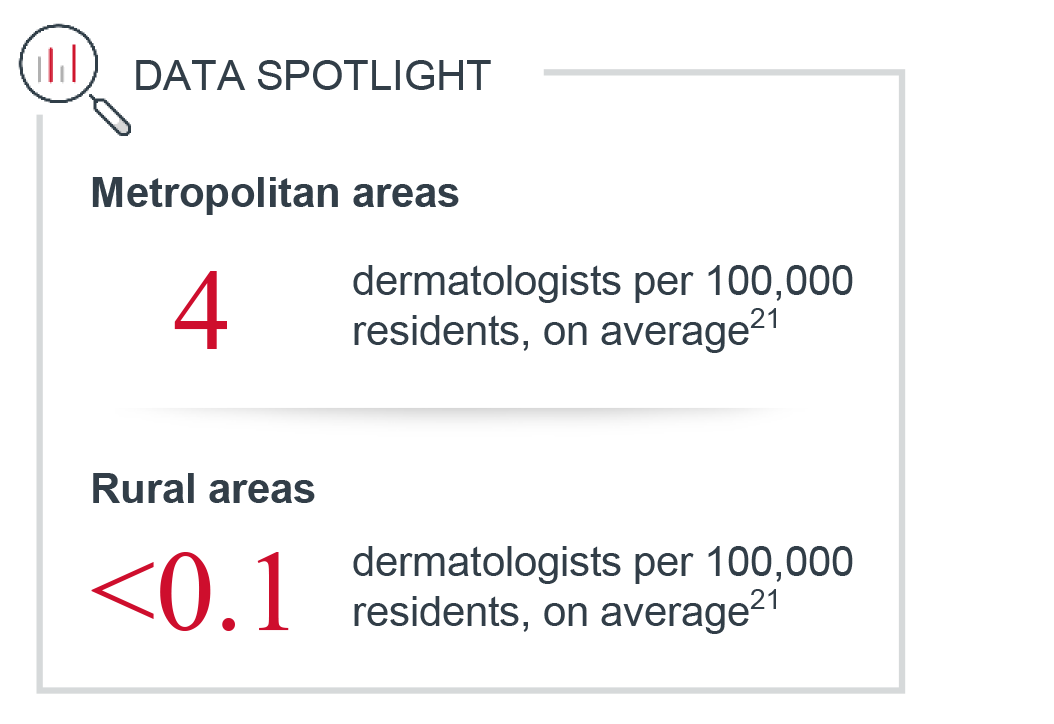
These barriers are compounded by limited geographic access to specialists. In rural areas, patients often must travel long distances or endure long waits for an appointment since demand for specialists far outpaces supply.21 Even in metropolitan areas with greater access to dermatologists, patients routinely wait months for an appointment due to inefficient referral pathways and workforce constraints.21
Teledermatology can expand reach, but virtual visits alone can’t close equity gaps for AA and AD. Without reliable broadband access, digital literacy, and access to high-quality imaging, patients who would benefit most from dermatology remain excluded from care.
Challenge 3: Training gaps limit care for skin of color and diverse hair types
Variation in clinician training and clinical exposure across different skin tones and hair types can contribute to delayed diagnosis, misdiagnosis, and inconsistent management of CISDs.
Medical education has historically underrepresented dermatologic conditions in skin of color, limiting clinicians’ ability to recognize how diseases like AD and AA present across diverse patients. These gaps are often reinforced during dermatology residency, where clinical exposure varies by geography and patient mix, leaving some specialists with limited experience diagnosing and managing AA and AD across different racial and ethnic groups.
At the same time, primary care providers — often the first or only point of contact, particularly in underserved communities — face similar training gaps, along with limited decision support and unclear referral pathways. Together, these factors contribute to misdiagnosis, delayed referral, and prolonged time to treatment, exacerbating disparities in care and outcomes.
"At a recent educational session on alopecia areata, I started with an easy question, ‘How many cases of severe alopecia areata have you guys seen?’ Eight residents, including some that were due to graduate, admitted that they had never seen it."
Crystal Aguh, MD, Associate Professor of Dermatology
The Johns Hopkins University
Challenge 4: Health equity work remains vulnerable to shifting political and institutional pressures
Even as disparities in outcomes persist, many health systems are becoming more cautious about equity-focused language, branding, and programming. Equity initiatives may be viewed as politically sensitive, leading institutions to worry that targeted efforts could be perceived as benefiting some groups over others. In response, some organizations may distance themselves from perceived political risks, potentially eroding critical infrastructure and leadership efforts.
Challenge 5: Current funding structures are misaligned with equity-focused dermatology work
Procedural dermatology, such as skin cancer excisions, destruction of premalignant lesions, and biopsies, tends to be reimbursed at higher rates than ongoing management of skin conditions like AA and AD.24 This imbalance creates a financial disincentive for clinics seeking to invest in continuity-based care, health equity initiatives, or services for patient populations disproportionately affected by CISDs.
As a result, equity‑focused dermatology programs frequently depend on individual commitment rather than stable, structural funding, which can threaten long‑term sustainability. The burden of sustaining these efforts often falls disproportionately on women and minoritized physicians.25 These physicians often take on diversity, outreach, and community engagement work in addition to their clinical responsibilities. Further compounding funding issues, many grants that support equity initiatives are short‑term and non‑renewable. This has led many equity-focused programs to lose funding just as they begin to demonstrate impact.
5 strategies to improve health equity in dermatology
Organizations that design systems to remove friction across the patient care journey will be able to make meaningful progress on health equity in dermatology. The five strategies below address interconnected barriers that limit equitable access to care for CISDs, such as AA and AD. Although the strategies are most effective when implemented simultaneously, they follow a logical progression that mirrors the patient experience, going from initial awareness and engagement to sustained delivery of high-quality, equitable care.
By building trust over time, organizations support earlier access to care and provide resources for communities that may otherwise remain disconnected from the health system. Trust is a critical foundation for patients with CISDs, including AA and AD, allowing them to successfully navigate dermatology care.
Establish repeated, visible presence in trusted community settings
Rather than relying on one-time interactions or short-term pilots, organizations should focus on building durable relationships with communities through ongoing partnerships. Partnering with institutions that are already trusted and embedded in daily life — such as churches, barbershops, hair salons, and community centers — can help organizations reach patients in familiar, culturally affirming settings.
"You can’t just show up once. That’s not enough. You have to show through action and investment of time and energy that you are legitimate. That you’re there for the long haul."
Adam Friedman, MD, Professor and Chair, Dermatology
The George Washington University of Medicine & Health Services
Case-in-brief
Health equity in action: Dermmunity™
The challenge Many community members in underserved Los Angeles neighborhoods have never seen a dermatologist (43.7%) or have had trouble accessing a dermatologist (30.5%).24
The approach Established in 2020 by the University of Southern California (USC) Department of Dermatology, Dermmunity™ delivers monthly dermatologic education directly to the community through trusted community organizations, clinics, shelters, and health fairs.
USC faculty and trainees lead educational sessions about skin healthcare topics and help community members navigate when to visit a dermatologist, how to schedule appointments, and how to access dermatology care based on insurance status.
Consistent, long-term engagement with the same communities, as well as responsiveness to community feedback, have helped build familiarity and trust.
The result From 2020 to 2024, Dermmunity™ reached 406 participants across 15 events.24 Surveys showed improved understanding of when to see a dermatologist, how to schedule care, and increased intention to seek dermatology care in the future.24 |
Use education that reflects lived experience and representation
Effective education relies on materials and communication that reflect patients’ lived experiences and identities. First, acknowledging cultural practices and using language your audience recognizes and understands, rather than overly clinical terms, makes information more relevant and accessible. Being curious about cultural or emerging care practices can also further strengthen engagement, particularly when effective patient approaches are thoughtfully incorporated into ongoing care plans.
Representation also plays a critical role in building understanding and trust. Giving community members visual examples of dermatologic conditions across a range of skin tones and hair types can improve recognition, comprehension, and confidence in care decisions.
Deliver education through platforms that community members actually use


Leverage social media for trust-building and credibility
Increasingly, physicians, departments, and health systems are using social media to speak directly to patients in an accessible, timely way. Providers can create social media posts to demystify dermatologic conditions, address common misconceptions, and provide context patients may not receive during traditional care encounters.
Importantly, social media’s primary value lies in establishing credibility, transparency, and an ongoing dialogue with the communities being served. Increasing patient volumes through social media outreach is a secondary outcome.
Social media’s role in trust-building
✓ Social media can be a …
- Trust-building entry point to dermatology
- Channel to extend patient education
- Tool to help patients self-triage before scheduling care
- Way to counter misinformation with evidence-based content
- Most effective when tied to a trusted clinician
✕ Social media is not a …
- Replacement for in‑person diagnosis or treatment
- Solution to insurance, workforce, or capacity constraints
- Channel that is low-effort or scalable for providers
- Substitute for clinical tools or physical exams
- Sustainable without institutional support
Even when patients have initial access to dermatology care, systemic barriers (e.g., transportation challenges, digital access or literacy gaps) and fragmented referral pathways can limit care quality and continuity. Removing these barriers helps engage patients earlier in the care journey, which enables timelier diagnosis and more consistent care management.
Simplify the on-ramp to care by fixing referral pathways
Referral pathways often break down before patients reach a specialist. Many skin and hair conditions are initially diagnosed or managed in primary care, but clinicians may lack clear guidance on when to escalate to a specialist or how to navigate the referral process.
Standardized referral criteria for conditions like AA and AD can help primary care teams escalate care appropriately. Health systems can further streamline referrals by embedding diagnostic codes into the electronic health record (EHR) to automatically route patients to the appropriate provider based on condition severity and clinical need.
"We have ICD-10 codes linked to specific diagnoses. The patient won’t know the code, but they know the name of the diagnosis. When the patient makes an appointment online or by phone, we use those codes to send the patient to providers that focus on that diagnosis."
Roopal Kundu, MD, Founder and Co-director, Northwestern Medicine Center for Ethnic Skin and Hair and Professor of Dermatology and Medical Education
Northwestern University Feinberg School of Medicine
Bring dermatology care to the community
Some dermatologists offer their services in trusted local settings such as churches, community centers, and other familiar gathering places. Delivering these services in nonclinical, familiar environments can make patients who feel intimidated or disconnected from traditional healthcare settings more comfortable.
In addition to in-person services, assisted teledermatology models can provide a human connection point to help patients access virtual dermatology services. Trained staff can help patients understand what telehealth is, prepare for their visit, and navigate digital health platforms. Staff can help patients with skin diseases capture the images needed for teledermatology appointments. Proper lighting, neutral backgrounds, or guidance on positioning can be central to accurate diagnosis and treatment decisions.
Community-based teledermatology also cuts down on transportation needs and helps address connectivity gaps through shared broadband and other technical infrastructure, creating a more supportive and accessible on-ramp to care.
Essential components for effective assisted teledermatology


Case-in-brief
Health equity in action: Church-based teledermatology clinics
The challenge During the COVID-19 pandemic, residents of Wards 7 and 8, the most underserved areas of Washington, D.C., couldn’t access a local health system’s teledermatology services due to connectivity issues and digital literacy gaps.
The approach The health system embedded teledermatology clinics within trusted local churches. At these clinics, community volunteers provided education and hands-on support for telehealth visits, registration, and follow-up care.
The program has since evolved into comprehensive health fairs that offer disease education and screening for common comorbidities, such as AA, AD, and psoriasis. The health system has built long-lasting community through its continued presence, financial investment in local churches, and responsiveness to community feedback.
The result The church-based teledermatology clinics now consistently serve dozens of patients per month who return regularly for follow-up care. Other institutions have also replicated the model, creating similar community-based teledermatology programs. |
Provider readiness is critical to expanding equitable access to dermatologic care. Education, continuous learning, and real-time decision support ensure clinicians are equipped to care for diverse patient populations.
Expand early exposure to diverse patient populations through structured training opportunities
Equity gaps begin early in training. Medical students interested in health equity often lack sustained mentorship and hands-on clinical exposure to diverse patient populations. Integrating equity earlier through dedicated faculty mentors, diverse case presentations, and practical tools can help reinforce dermatology as a viable and impactful path for addressing health disparities.
Funded rotations, visiting student experiences, and conference attendance can expose medical students to a broader range of conditions and patient needs that may not be seen locally. These opportunities build clinical competency, help normalize diversity in dermatologic presentation, and ensure trainees develop skills and confidence that carry forward into residency and practice.
Case-in-brief
Health equity in action: USC’s Keck School of Medicine Skin of Color and Pigmentary Research fellowship
The challenge Medical students interested in dermatology for diverse communities often must seek specialized opportunities to gain the skills, experience, and research needed to treat diverse patient populations during critical pre-residency years.
The approach Through this one-year fellowship, medical students between their third and fourth year can receive immersive, one-on-one mentorship from an established dermatologist. In addition to working in the dermatology clinic weekly, research fellows participate in sponsored clinical trials, prospective and retrospective studies, case reports, literature reviews, and book chapters related to skin-of-color conditions and pigmentary disorders.
In addition, research fellows support two community engagement programs that teach children about science and dermatology (DermRISESTM) and underserved communities about dermatology care (Dermmunity™).
The result Fellows gain robust clinical and research experience and develop a strong foundation in equity-focused dermatology care that shapes their future practice. |
Treat inclusive dermatology care as a standard, not a specialty
Delivering inclusive, high-quality care shouldn’t be restricted to a few specialists. Every dermatologist should be equipped to treat patients with conditions like AA or AD across the full spectrum of skin tones, hair types, and cultural backgrounds. Making equity the baseline helps prevent access bottlenecks that occur when care is limited to certain providers. It also signals that skin-of-color expertise is an expectation for all clinicians and trainees.
Reinforcing inclusive dermatology care within subspecialties and through collaboration with related fields (rheumatology, immunology, primary care, etc.) further ensures that high-quality care is consistently available across the care continuum.
"Treating skin of color is just a basic requirement of being a dermatologist. If you can only treat one skin type, you have received inadequate training."
Crystal Aguh, MD, Associate Professor of Dermatology
The Johns Hopkins University
Support ongoing learning through peer-driven education
Dermatologic education extends well beyond residency training. As evidence evolves and patient populations become increasingly diverse, clinicians need consistent learning opportunities that reflect real world patient practices.
Case-based learning forums play a central role in this effort by allowing dermatologists to engage with emerging research, diagnostic challenges, and treatment approaches grounded in daily clinical experience. Both conference participation and virtual learning formats, such as grand rounds, can help sustain this exposure across career stages. For example, recurring virtual learning sessions create space to discuss recent cases, evolving dermatology trends, and culturally relevant patient behaviors.
Peer-driven learning is further strengthened when clinicians contribute to shared resources such as dermatologic imaging libraries, expanding the evidence base and ensuring that continuing education better reflects the patients dermatologists serve. For example, the Clinical Image Collection, developed in partnership by the American Academy of Dermatology and the Skin of Color Society, offers a growing repository of images representing the full spectrum of skin tones and is designed to enhance diagnostic accuracy and training.27
Embed real-time decision support in clinical workflows
While clinicians bring deep expertise to patient care, managing complex conditions under time pressure often requires support beyond formal education. Practical, real-time tools can help clinicians navigate diagnosis, treatment selection, and patient communication in the moment. Backing formal education with real-time clinical support allows clinicians to apply current evidence without disrupting workflow.
Examples of real-time support include visual diagnostic platforms like VisualDx®, evidence synthesis tools that help navigate nuanced treatment decisions like OpenEvidence, and EHR-integrated platforms like EMA®, a practice management tool tailored to dermatologists and other specialists. When these tools are embedded into everyday practice, they reinforce learning, reduce cognitive burden, and make equitable, high-quality care easier to deliver consistently across patient encounters.
Clear, consistent messaging helps patients identify care environments that are responsive to their needs, while adaptive language allows programs to remain viable amid evolving organizational constraints.
Make inclusion visible to patients
Patients actively look for cues that an organization understands their needs, values their experiences, and is prepared to care for them appropriately. When those signals are absent or vague, patients may delay or look elsewhere for care.
To reduce this uncertainty, clinics can use service descriptions to be clear about which conditions they specialize in, the populations they commonly serve, and the types of expertise patients can expect. For example, naming conditions like AA or AD or clearly referencing experience across skin tones, hair types, and cultural contexts helps patients identify a clinic they are comfortable with, rather than forcing them to infer inclusivity from generic language.
Anchor messaging in skin conditions when equity framing is constrained
The current environment requires nimble, adaptable messaging that can help organizations navigate institutional requirements for research approval, grant funding, and program alignment without abandoning a commitment to equitable care.
Rather than using broad equity-based framing and language, organizations should strive for specificity. Naming the skin conditions or diseases addressed and their impacts on communities or health systems can help refocus the conversation on high-quality care while maintaining a commitment to equitable care. For example, because AA and AD disproportionately affect women and people of color,11,17,18 focusing research or funding conversations on the condition will still benefit those populations. At the same time, being explicit about which patient populations experience disproportionate burden or barriers — and why — is still crucial so that disparities are clearly named within conversations about skin conditions like AA or AD.
The ability to shift emphasis between condition and population-specific language based on the context can help systems continue to improve outcomes for historically underserved patients.
Sustainable funding transforms equity-focused dermatology care from a fragile initiative into durable infrastructure. With stable resources in place, organizations can invest in high-quality, equitable care for AA and AD across diverse populations, regardless of shifting budget priorities.
Treat equity work as funded infrastructure
Closing the equity pay gap requires treating equity work as funded infrastructure rather than discretionary or volunteer labor. In practice, this means formally resourcing the clinical, operational, leadership, and administrative work required to design, deliver, and sustain equitable dermatology care.
Protected time for clinicians, including through dedicated FTEs for clinical leadership, research, community outreach, or program development and marketing, is foundational, ensuring that health equity work does not come at the expense of patient care, academic productivity, or professional advancement.
Just as critically, equity work is most successful when reflected in a formal budget allocation. When equity efforts depend on short-term grants or annual discretionary decisions, they remain vulnerable to shifting priorities. By making equity a permanent line item, organizations signal that this work is core to their mission and operations.
"If you say something is important but don’t put money behind it, it’s not actually important. If it’s not a line item in your budget, it’s not actually important."
Crystal Aguh, MD, Associate Professor of Dermatology
The Johns Hopkins University
Use external funding as a catalyst
External funding can advance equity initiatives most effectively when it serves as a catalyst for long-term institutional investment, particularly when internal funding is limited. Industry partnerships and grants can enable organizations to pilot programs, generate outcomes data, and demonstrate measurable community impact, creating the evidence needed to make a stronger internal business case for sustained funding. Industry partnerships are best for early-stage support, support for clinics, fellowships, and pilot programs. Meanwhile, grant funding is valuable during research and startup phases to support program design, data collection, and evaluation. Used intentionally, these funding sources can help equity initiatives move from pilots to integrated, durable components of care delivery.
Parting thoughts
For organizations, equitable dermatologic care is both a clinical imperative and operational advantage. Care becomes more reliable when it is designed to include trust-building, access, clinician readiness, and funding. Patients are more likely to enter care earlier, engage more consistently, and receive treatment that aligns with their clinical needs and cultural context.
For historically underrepresented patients with CISDs like AA or AD, these integrated strategies can help shift dermatology from a system that has excluded them to one intentionally designed to meet their needs. Done well, this work strengthens patient trust and community credibility, positioning health systems as meaningful differentiators in their markets.
Questions for discussion
Before launching or expanding your organization’s equity-focused dermatology program, it’s important to address critical factors, like how the program will align with organizational goals, resource availability, and departmental or health systems leadership.
- What specific equity gaps in dermatology care are we best positioned to address?
- What resources — such as staffing, funding, space, or technology — are required to launch and sustain this work?
- Who will lead and own this initiative? How will their time and contributions be supported?
- How will we measure success, both in terms of patient outcomes and institutional impact?
- What internal and external partnerships could strengthen our approach?
- How will we ensure this work is embedded into standard operations rather than dependent on individual champions?
- What risks (e.g., political, financial, or reputational) should we anticipate, and how can we proactively manage them?
- How will we communicate our commitment to equity to patients, staff, and the community?
1 Patton K, et al. Increased Patient Volumes for Select Skin Conditions Align With Evolving Dermatologic Treatment Patterns. Trilliant Health. August 25, 2024.
2 Alopecia Areata. National Alopecia Areata Foundation. Accessed March 27, 2026.
3 Chan KR, et al. Prevalence of atopic dermatitis in the United States from 2021 to 2024: Data from the National Health Interview Survey. Journal of the American Academy of Dermatology. January 19, 2026.
4 Tang X, et al. Allergic-related skin diseases: Global disease burden from 1990 to 2021 and future trends. World Allergy Organization Journal. June 3, 2025.
5 Bunick CG. Treating the Pain of Atopic Dermatitis. Dermatology Times. November 5, 2025.
6 Alopecia Areata. Cleveland Clinic. August 30, 2023.
7 Shakoei S, et al. Sleep disturbance in alopecia areata: A cross‐sectional study. Health Science Reports. April 1, 2022.
8 Park JS, et al. 54270 Atopic dermatitis, psychosocial comorbidities, and barriers to comprehensive care. Journal of the American Academy of Dermatology. September 1, 2024.
9 Ma T, et al. Alopecia Areata: Pathogenesis, Diagnosis, and Therapies. MedComm. April 21, 2025.
10 Cardenas S, et al. Socioeconomic Disparities in Gentle Skin Care Access for Atopic Dermatitis: Affordability and Pharmacy Deserts. Journal of Drugs in Dermatology. June 12, 2025.
11 Chovatiya R, et al. Financial burden and impact of atopic dermatitis out-of-pocket healthcare expenses among black individuals in the United States. Archives of Dermatological Research. September 27, 2021.
12 Bosslett M. Pediatric AD Disparities in the United States: An Updated Review. Dermatology Times. April 9, 2025.
13 Croce EA, et al. Lower Socioeconomic Status May Help Explain Racial Disparities in Asthma and Atopic Dermatitis Prevalence: A Mediation Analysis. Pediatrics. December 1, 2024.
14 Bottoms-McClain L, et al. Diagnosed Allergic Conditions in Adults: United States, 2024. National Center for Health Statistics. January 8, 2026.
15 Ständer S. Atopic Dermatitis. The New England Journal of Medicine. March 25, 2021.
16 Abuabara K, et al. Racial and Ethnic Disparities in Access to Advanced Therapies for Atopic Dermatitis in the United States. Journal of Drugs in Dermatology. December 29, 2025.
17 New Research: Prevalence of Alopecia Areata across Races and Ethnicities. National Alopecia Areata Foundation. May 23, 2023.
18 Sy N, et al. Overall and Racial and Ethnic Subgroup Prevalences of Alopecia Areata, Alopecia Totalis, and Alopecia Universalis. JAMA Dermatology. March 1, 2023.
19 Moseley IH, et al. Alopecia areata in underrepresented groups: preliminary analysis of the all of us research program. Archives of Dermatological Research. February 10, 2023.
20 Venkatesh KP, et al. Barriers to Care-Seeking and Treatment Adherence Among Dermatology Patients: A Cross-Sectional National Survey Study. Journal of Drugs in Dermatology. May 20, 2022.
21 Johnson, M, et al. Resource Management Challenges in Rural Dermatological Care: A Mapping Review. Cureus. January 16, 2025.
22 Xiang DH, Nambudiri VE. The Importance of Studying Reimbursement Models in Dermatology to Improve Health Equity. International Journal of Dermatology and Venereology. November 13, 2024.
23 The word “minoritized” is used to clarify that disadvantage arises from structural inequity, rather than any inherent quality of a group.
24 Turner K, et al. The Impact of Dermatology Community Outreach Programs: Improving Health Equity Through Service. Journal of Drugs in Dermatology. October 15, 2025.
25 Hebebrand M. AAD Partners With SOCS to Launch Inclusive Image Library. Dermatology Times. May 8, 2025.
At Pfizer, we’re in relentless pursuit of breakthroughs that change patients’ lives. We innovate every day to make the world a healthier place.
Our unique resources allow us to do more for people. Using our global presence and scale, we’re able to make a difference in local communities and the world around us.
Pfizer supports the global healthcare community’s independent quality improvement initiatives to improve patient outcomes in areas of unmet medical need that are aligned with Pfizer’s medical and/or scientific strategies. For more information, please visit www.pfizer.com.
This report is sponsored by Pfizer, an Advisory Board member organization. Representatives of Pfizer helped select the topics and issues addressed. Advisory Board experts wrote the report, maintained final editorial approval, and conducted the underlying research independently and objectively. Advisory Board does not endorse any company, organization, product, or brand mentioned herein.
To learn more, view our editorial guidelines.
This report is sponsored by Pfizer. Advisory Board experts conducted the underlying research independently and objectively.


Jennifer Fierke
Senior writer and editor, Sponsorship
Abner Russom
Senior research analyst
Posted on August 18, 2026

Don't miss out on the latest Advisory Board insights
Create your free account to access 1 resource, including the latest research and webinars.
Want access without creating an account?
You have 1 free members-only resource remaining this month.
1 free members-only resources remaining
1 free members-only resources remaining
You've reached your limit of free insights
Become a member to access all of Advisory Board's resources, events, and experts
Never miss out on the latest innovative health care content tailored to you.
Benefits include:
Unlimited access to research and resources
Member-only access to events and trainings
Expert-led consultation and facilitation
The latest content delivered to your inbox
You've reached your limit of free insights
Become a member to access all of Advisory Board's resources, events, and experts
Never miss out on the latest innovative health care content tailored to you.
Benefits include:
Unlimited access to research and resources
Member-only access to events and trainings
Expert-led consultation and facilitation
The latest content delivered to your inbox
This content is available through your Curated Research partnership with Advisory Board. Click on ‘view this resource’ to read the full piece
Email ask@advisory.com to learn more
Click on ‘Become a Member’ to learn about the benefits of a Full-Access partnership with Advisory Board
Never miss out on the latest innovative health care content tailored to you.
Benefits Include:
Unlimited access to research and resources
Member-only access to events and trainings
Expert-led consultation and facilitation
The latest content delivered to your inbox
This is for members only. Learn more.
Click on ‘Become a Member’ to learn about the benefits of a Full-Access partnership with Advisory Board
Never miss out on the latest innovative health care content tailored to you.
Benefits Include:
Unlimited access to research and resources
Member-only access to events and trainings
Expert-led consultation and facilitation
The latest content delivered to your inbox
