Auto logout in seconds.
Continue Logout
In our first post highlighting how providers can reduce infant mortality, we noted that the infant mortality rate in the United States is 5.9 infant deaths per 1,000 births. But when we break it down by demographic groups, the rate for Black infants is nearly double that number at 11.4 deaths per 1,000 births, compared with 4.9 among non-Hispanic white infants. These racial disparities hold for pregnancy outcomes as well: The rate of preterm birth is 14% among Black women, compared with 9% among white women.
Join our upcoming webconference: Health Equity 101
As these figures demonstrate, it's clear that we cannot address the infant mortality challenge without taking racial disparities into account. To do this, some health systems are confronting implicit racism by empowering patients and educating providers—and we can learn from their experiences.
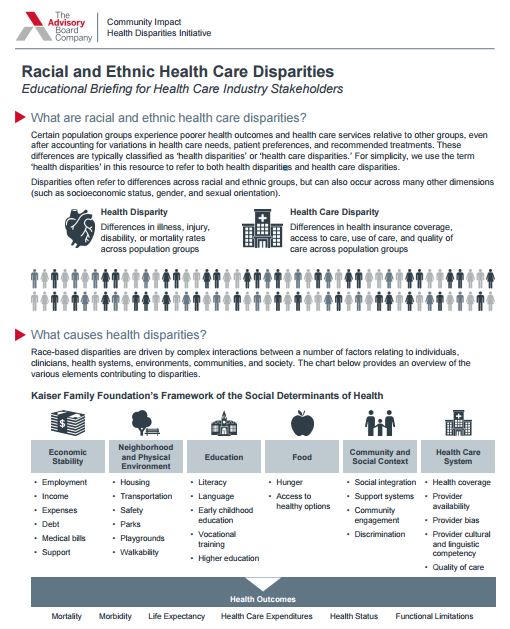
Doulas have unique skills to support and empower pregnant women of color
Even when women of color attend prenatal doctors' appointments, a wealth of anecdotal evidence suggests they receive subpar care compared with white women. They frequently report not feeling listened to or respected by medical professionals. For example, women of color report doctors not taking their complaints of pain or stress seriously, and medical staff not explaining their care options during childbirth.
In our last post, we wrote about using doulas to support pregnant women. Doulas can provide unique support to women of color by serving as informed advocates throughout pregnancy and childbirth. Doulas provide pregnancy-specific health education so that women are able to best care for themselves, and they ensure that medical staff listen to and address women's needs. One former doula explained, "With Black clients, my job involved more activism and advocacy. It was my job to make sure these women had access to the things they are supposed to have access to, that their birth plans were respected, that they were seen and heard."
Providing that constant source of both information and encouragement not only improves expectant mothers' interactions with the health system, it empowers them to engage in healthy behaviors and mitigates the stressors that can compromise the health of their pregnancies.
Improving provider awareness of their role in perpetuating racial disparities is the next frontier in culture training
Racial bias often isn't intentional, and providers may not be aware of their role in compromising quality of care for their patients. Even though national bodies such as the American College of OB-GYNs recognize the impact of provider bias, there is minimal literature evaluating the efficacy of interventions aimed to combat implicit or explicit bias. Still, many organizations are starting to train providers on cultural sensitivity and unconscious bias.
For example, the Genesee County REACH program, focused on reducing disparities in maternal and infant care in Genesee County, Michigan, conducts "Community Windshield Tours" for their providers. Trained guides facilitate these bus tours to expose providers to some of the neighborhoods where their patients live and highlight the social and environmental barriers their patients face. Providers see the poor housing conditions, the disproportionate ratio of liquor stores to grocery stores, and the inaccessible bus routes their patients contend with on a daily basis. Importantly, tour guides also point out the strengths and resources in the community that can support out-of-office care (e.g., churches, community gardens).
Pre/post surveys showed that the windshield tours improved medical staff's cultural sensitivity and understanding of patients' circumstances. Some providers reflected on the fact "that they tended to … [make] judgments regarding patient character based on the perspective of their work setting rather than the broader context of their patients' daily lives." This deeper understanding even led providers to advocate and actively pursue institutional and community changes. The health system now has a more lenient policy around late appointment arrivals, and the city has moved bus stops to more convenient locations.

Don't miss out on the latest Advisory Board insights
Create your free account to access 1 resource, including the latest research and webinars.
Want access without creating an account?
You have 1 free members-only resource remaining this month.
1 free members-only resources remaining
1 free members-only resources remaining
You've reached your limit of free insights
Become a member to access all of Advisory Board's resources, events, and experts
Never miss out on the latest innovative health care content tailored to you.
Benefits include:
Unlimited access to research and resources
Member-only access to events and trainings
Expert-led consultation and facilitation
The latest content delivered to your inbox
You've reached your limit of free insights
Become a member to access all of Advisory Board's resources, events, and experts
Never miss out on the latest innovative health care content tailored to you.
Benefits include:
Unlimited access to research and resources
Member-only access to events and trainings
Expert-led consultation and facilitation
The latest content delivered to your inbox
This content is available through your Curated Research partnership with Advisory Board. Click on ‘view this resource’ to read the full piece
Email ask@advisory.com to learn more
Click on ‘Become a Member’ to learn about the benefits of a Full-Access partnership with Advisory Board
Never miss out on the latest innovative health care content tailored to you.
Benefits Include:
Unlimited access to research and resources
Member-only access to events and trainings
Expert-led consultation and facilitation
The latest content delivered to your inbox
This is for members only. Learn more.
Click on ‘Become a Member’ to learn about the benefits of a Full-Access partnership with Advisory Board
Never miss out on the latest innovative health care content tailored to you.
Benefits Include:
Unlimited access to research and resources
Member-only access to events and trainings
Expert-led consultation and facilitation
The latest content delivered to your inbox